

Work
Best Waterproof Work Boots: How to Choose the Right Pair for Your Job
Wet conditions put work boots to the test. Rain, mud, standing water, and snow can be part of the job, and choosing the best waterproof work boot means finding a pair built for both the environment and the work you do in it.
At Ariat, we put waterproof performance to the test. DRYShield™, our proprietary waterproof technology used in many Ariat work boots, is tested through 50,000 flexes while submerged up to the collar in water to evaluate its ability to maintain waterproof performance through repeated movement. It's one example of the rigor we bring to developing work gear for the conditions workers face on the job.
In this guide, we'll break down what makes a work boot waterproof, when waterproof protection matters, and how to choose the right combination of traction, protection, fit, and coverage for your work.
Looking for a waterproof work boot for a specific job or condition? Jump to our top Ariat picks:
- Best Waterproof Safety-Toe Work Boots for Oil and Gas
- Best Waterproof Safety-Toe Work Boots for Women
- Best Waterproof Work Boots for Construction
- Best Waterproof Work Boots for Outdoor Chores and Farm and Ranch Work
- Best Slip-Resistant Waterproof Work Boots for Indoor Work
- Best Waterproof Work Boots for Cold and Wet Conditions
Why Do You Need Waterproof Work Boots?
Waterproof work boots are designed for jobs where exposure to water is more than an occasional inconvenience. Rain can collect on unfinished jobsites, irrigation can leave landscaping and agricultural ground saturated, and ranch work can mean hours spent moving through wet grass and mud. Outdoor construction, utility work, oil and gas, and winter work can bring their own combinations of puddles, precipitation, and changing ground conditions.
The job itself still determines what you need beyond waterproofing. Wet surfaces may make traction a priority, cold precipitation may call for insulation, and some workplaces require safety-toe or other protective features. The goal is to choose a waterproof work boot that addresses the water exposure in addition to the other conditions you encounter during a typical shift.

What Trades Need Waterproof Work Boots?
Construction and excavation crews, farmers and ranchers, oil and gas workers, utility and electrical crews, and even indoor factory workers can benefit from waterproof work boots when their jobs involve regular exposure to rain, mud, wet ground, or standing water.
Not every worker in these trades needs waterproof footwear every day. Consider your specific work environment, how frequently you encounter wet conditions, and any footwear requirements set by your employer or jobsite.
Waterproof vs. Water-Resistant Work Boots
Waterproof and water-resistant work boots provide different levels of protection from moisture. Water-resistant boots are designed to resist limited exposure to water, while waterproof boots use a more complete construction designed to keep water from entering the boot in wet conditions.
Ariat waterproof work boots primarily use DRYShield™ technology, a waterproof yet breathable construction that combines a waterproof bootie with impermeable seams and a water-resistant outer material such as non-wicking textile or water-resistant leather. Together, these components create a barrier designed to keep water out while remaining breathable.
Some Ariat work styles use water-resistant leather without DRYShield™. While the leather is treated to resist water, those styles do not include all the components used to make the entire boot waterproof. Water-resistant leather alone does not make the boot completely waterproof.
For regular exposure to rain, mud, wet ground, or other sustained moisture, look for a boot specifically identified as waterproof. For lighter or occasional exposure, water-resistant footwear may be sufficient.

How to Choose Waterproof Work Boots for Your Job
1. Start With How Wet Your Job Gets
Consider both how much water you encounter and how long you're exposed to it. Occasional rain creates different demands than spending hours working through mud, wet vegetation, standing water, or snow.
Think about where that moisture reaches, too. Deeper mud, puddles, and snow may make a taller boot useful for additional coverage, while primarily working on wet ground may put more emphasis on traction and mobility.
2. Check Your Safety-Toe Requirements
Waterproofing should not come at the expense of the protection your job requires. If your workplace calls for a safety toe, choose a waterproof boot with steel, composite, or carbon composite toe protection that meets ASTM F2413 requirements for impact and compression. All Ariat safety-toe work boots meet this standard, regardless of toe type.
Which material is right for you depends on your work environment. For an overview of Ariat’s safety-toe options and how to choose the right protection for your work, see our Ariat guide to choosing the right safety-toe work boot. For a direct comparison of the materials themselves, see Steel vs. Composite vs. Carbon: Which Safety Toe Is Right for Your Job?
3. Consider the Surface and Terrain
Think about the surfaces you work on most often. Mud, uneven ranch ground, hard warehouse floors, metal surfaces, snow, and ice can place very different demands on a work boot.
Outdoor work on soft or uneven ground may call for added traction or a debris-releasing tread design, while hard indoor surfaces may benefit from a different outsole profile. Identifying the conditions underfoot will help you determine what kind of traction and outsole performance to look for.
4. Look for the Right Traction and Slip Resistance
If your job calls for waterproof footwear, you may also need to consider traction and slip resistance on wet or slick surfaces. Look for an outsole that provides the grip you need on the surfaces beneath you. Ariat work boots use different outsole and traction technologies depending on the demands of the job:
- Ariat Duratread™ outsoles: Our proprietary oil- and slip-resisting outsole designed for work environments where traction on slick surfaces is a priority.
- Vibram® Work outsoles: A high-performing outsole that satisfies all ISO standards for safety and protective footwear and provides advanced grip and durability.
- Glacier Grip™ technology: Available on select styles with Duratread™ outsoles, this technology was built for advanced traction in snowy and icy conditions.
For jobs where documented slip resistance matters, check the rating on the individual boot rather than assuming every outsole provides the same level of performance. Ariat uses two designations on work boots with ASTM slip-resistance ratings:
- SR: Meets ASTM standards for slip resistance.
- SRO: Meets the highest ASTM safety standards for slip resistance.
Ratings vary by style, so check the specifications for the individual boot along with any footwear requirements established by your employer or jobsite.
5. Decide Whether You Need Insulation
If your job keeps you outside through cold rain, snow, or slush, consider an insulated waterproof work boot. A rainy spring in Texas may call for waterproof protection without the need for insulation, while a cold, wet winter in more northern regions may require additional warmth.
Think about the temperatures you typically work in, how long you're exposed to the cold, and how active you are during a shift. Choose insulation based on the conditions you actually work in rather than assuming every waterproof boot needs it.
6. Choose the Right Boot Height
Think about how much coverage you need without sacrificing the movement your job requires. Six-inch work boots provide ankle coverage while allowing more freedom of movement, while eight-inch boots extend farther up the ankle and lower leg for added coverage in wet, muddy, or snowy conditions.
Pull-on work boots offer another option, particularly for workers who value easy on and off while still getting coverage above the ankle. When choosing a boot height, balance the coverage you need for mud, water, or snow with the freedom of movement your job requires.
7. Get the Fit Right
A work boot should fit securely without pinching or restricting your foot. Look for enough room to move your toes, a secure fit through the instep, and minimal heel movement as you walk. Try boots on with the type of socks you normally wear to work, since thicker socks and insulated linings can change how much room you have inside the boot.
Don’t rely on break-in to correct a boot that is too tight or the wrong width. For more guidance on sizing, heel fit, toe room, width, and what to expect as new boots break in, see How Should Work Boots Fit?.
Best Waterproof Work Boots for Different Jobs and Conditions
The right waterproof work boot depends on where you work and what the job demands beyond keeping your feet dry. Safety-toe requirements, traction needs, terrain type, temperature, and the amount of time spent on your feet can all point toward a different style.
Best Waterproof Safety-Toe Work Boots for Oil and Gas
The RigTEK Wildcat BOA® 8" CSA Waterproof Wide Square Toe Composite Toe Work Boot is one of the best Ariat waterproof work boots for oil and gas because it is built specifically for oilfield performance. Its composite safety toe provides added protection, while a unique traction pattern is designed for gripping metal surfaces encountered on the job. The eight-inch profile also provides more coverage from the elements.
Best for: Oilfield work, industrial work with chemicals, metal surfaces, jobs requiring safety-toe protection, wet conditions

$334.95
Built for oilfield performance, RigTEK™ has the durability and cushioning you need for long, hard days. The unique traction pattern is designed to grip on metal surfaces and advanced stability keeps you on your feet and performing your best.
Best Waterproof Safety-Toe Work Boots for Women
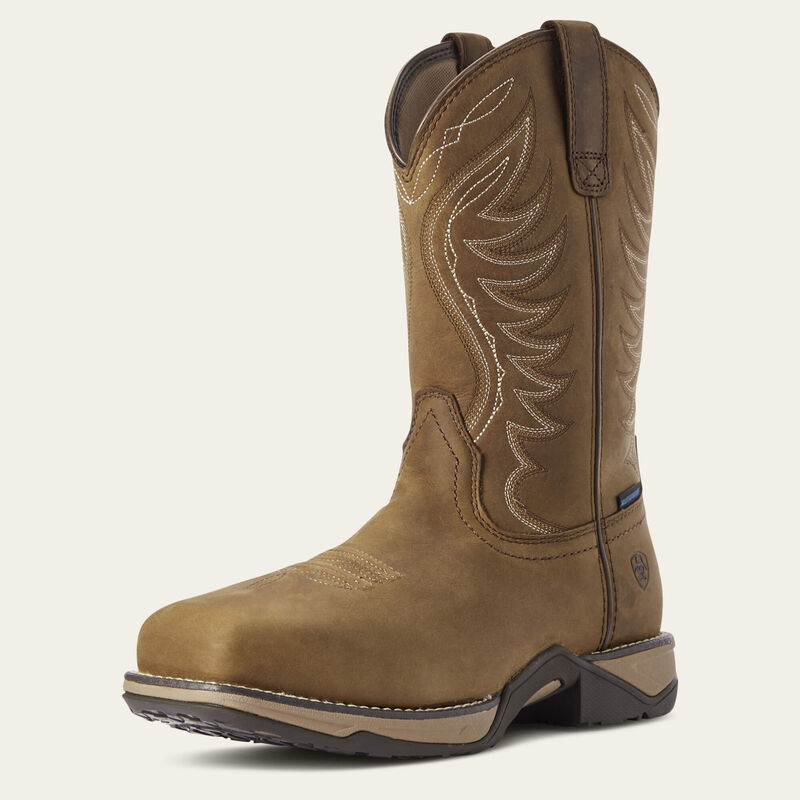
The Anthem Waterproof Composite Toe Work Boot is a pull-on waterproof work boot built for women who need both waterproof and safety-toe protection on the job. Built-in stability features make it a practical choice for jobsites where uneven, wet ground can be expected, while the pull-on construction is well suited to everyday outdoor chores.
Best for: Farm and ranch work, outdoor chores, jobs requiring safety-toe protection, wet conditions
$184.95
Built for a woman's foot, Anthem will keep your feet happy for as long as you're on them. With flexible support and lightweight, incredibly comfortable cushioning, it's the ultimate all-day, any job work boot. Ideal for farm and ranch work and construction.
Best Waterproof Work Boots for Construction
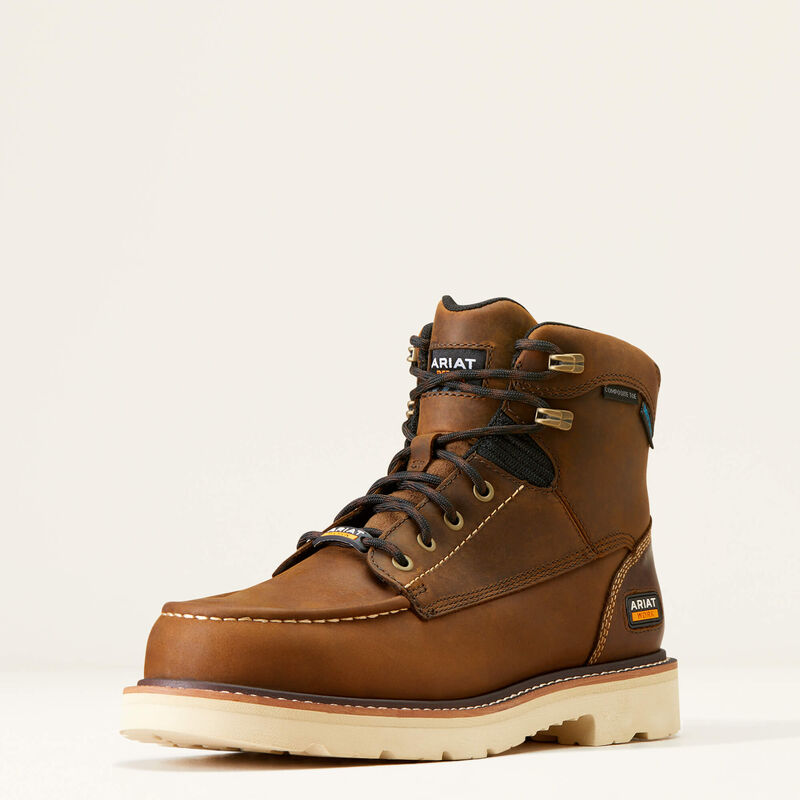
The Rebar Lift 6" Waterproof Composite Toe Work Boot is a versatile choice for construction workers who want a lightweight waterproof boot with added safety-toe protection. Its composite safety toe adds protection without weighing you down, making it a practical choice for workers who spend much of the day moving around the jobsite. Also available in a pull-on version, it’s versatile enough for regular wear off the clock too.
Best for: Construction, all-day wear, jobs requiring safety-toe protection, workers looking for a lightweight work boot, wet conditions
$199.95
Lightweight yet durable, Rebar® Lift delivers the cushioning and stability you need for long work days. Built to perform in outdoor conditions, and versatile enough to wear anywhere.
Best Waterproof Work Boots for Outdoor Chores and Farm and Ranch Work
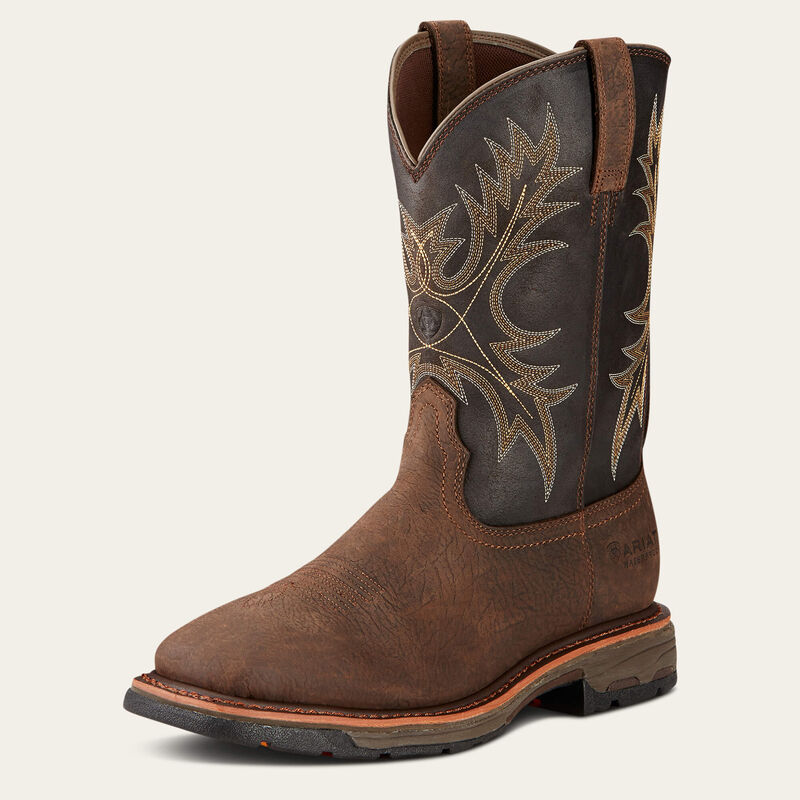
The WorkHog® Waterproof Work Boot is a strong waterproof option for farm and ranch work, where the job may require working on uneven ground throughout the day. Its side-to-side stability provides support on varied terrain, while built-in comfort features make it suited to long days of chores. The pull-on design makes for easy on-and-off, especially when your boots are wet.
Best for: Oil and gas exploration, farm and ranch work, outdoor chores, uneven ground, wet conditions
$229.95
The WorkHog® delivers exceptional side-to-side stability with cushioning and shock absorption. Loaded with comfort and durability, it's designed to withstand harsh outdoor work environments and oil and gas exploration.
Best Slip-Resistant Waterproof Work Boots for Indoor Work
The Outpace Shift 6" Waterproof Composite Toe Work Boot combines waterproof protection with a slip-resistant outsole for workers who encounter slick surfaces in factories, warehouses, and other indoor environments. Sneaker-like comfort and long-lasting cushioning support long periods spent standing and walking, while the six-inch shaft provides additional ankle coverage and support. A composite safety toe adds protection for workplaces where safety footwear is required.
Best for: Factory work, warehouse work, slick surfaces, hard floors, jobs requiring safety-toe protection

$169.95
Sneaker-like comfort meets work-shoe safety and durability. Built for indoor environments, Outpace™️ has a slip-resistant outsole and long-lasting cushioning you need for working long shifts on hard floors.
Best Waterproof Work Boots for Cold and Wet Conditions
The Endeavor 8" Waterproof Insulated Carbon Toe Work Boot is one of the best Ariat waterproof work boots for cold and wet conditions because it combines waterproof construction with 3M™ Thinsulate™ Insulation for added warmth. Its eight-inch shaft provides extra coverage, while full-range stability and specialized outdoor traction make it suited to challenging conditions that include rain and snow.
Best for: Heavy-duty construction, cold-weather jobs calling for insulation, snow and ice, jobs requiring safety-toe protection, wet conditions

$219.95
A rock-solid boot for outdoor work and construction, Endeavor pairs full-range stability with durable outdoor traction. An anatomical shape keeps feet supported on the job, and a shock-absorbing insole helps reduce foot fatigue.
Test: Is Your Waterproof Work Boot Right for the Job?
Before relying on a new pair at work, check:
- Fit: Wear your normal work socks and confirm adequate toe room without excessive heel slippage as you walk.
- Job-site requirements: Verify the safety-toe, electrical hazard (EH) rating, slip-resistance, or other safety ratings required by your employer.
- Traction: Match the outsole to the surfaces and terrain you encounter on the job.
- Weather: Determine whether you need waterproofing alone or waterproofing plus insulation.
- Coverage: Choose a shaft height appropriate for expected mud, rain, and splashing.
- Condition: Inspect seams, leather condition, outsole attachment, and tread-wear regularly.
How to Care for Waterproof Work Boots
Ariat work boots made with DRYShield™ technology do not require maintenance to maintain their waterproofing. The waterproof construction itself does not need to be periodically treated or reproofed.
Regular care can still help extend the life of boots with leather uppers. Remove dirt and mud after wear, clean the leather with products appropriate for the material, and allow wet boots to air-dry naturally. A waterproofing product can also be applied to help extend the life of the leather, but it is not necessary for maintaining the waterproof performance of DRYShield™.
In short, DRYShield™ does not need waterproofing maintenance, while the leather can benefit from routine care and a waterproofing product to help extend its lifespan.
Built for the Conditions. Chosen for the Job.
Wet conditions can look different depending on the work you do. A construction site, ranch, oilfield, warehouse, or winter jobsite can each call for a different combination of waterproof protection, traction, safety features, insulation, and coverage. The best waterproof work boot is one that’s suited not just to the weather, but to the specific demands of your trade and the conditions you work in every day.
Explore Ariat waterproof work boots to find the protection, features, and fit that work for your job.


