

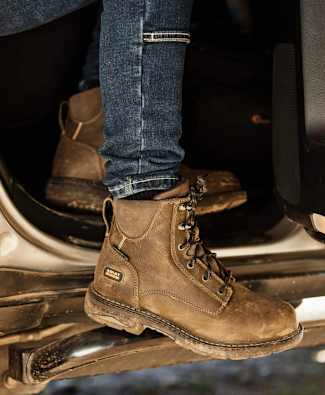
38 items
38 items
38 Results


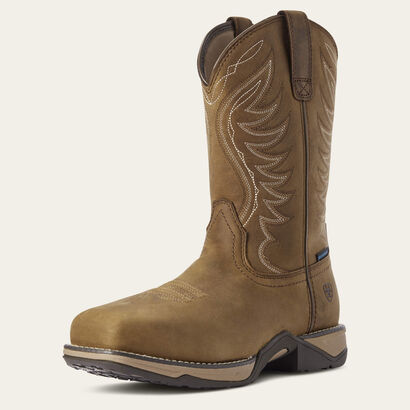

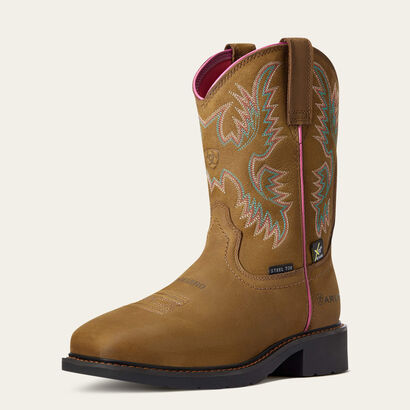

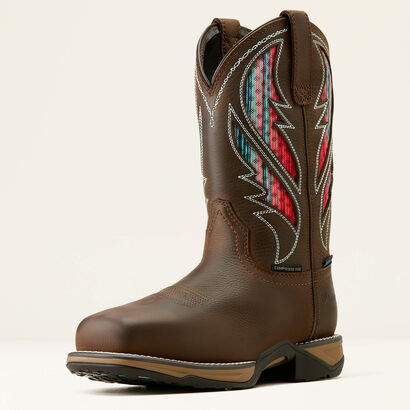

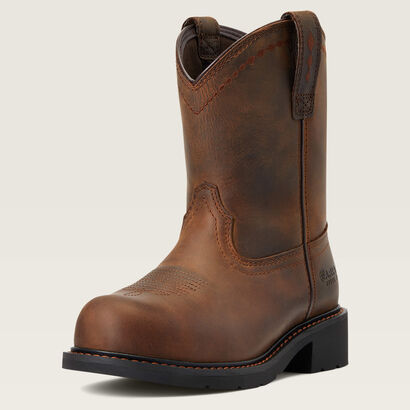


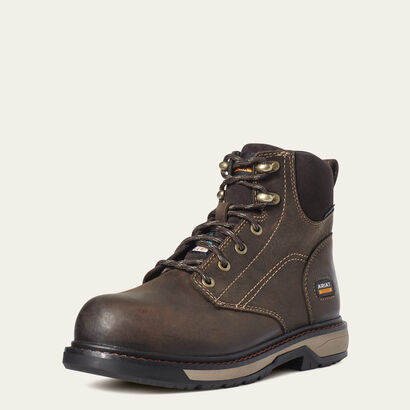

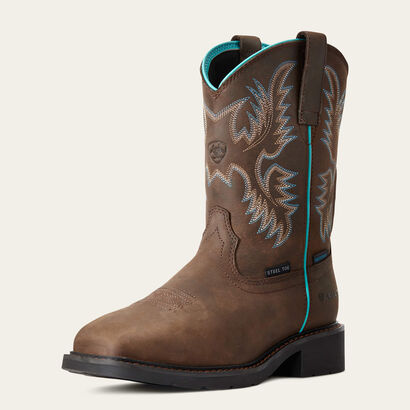


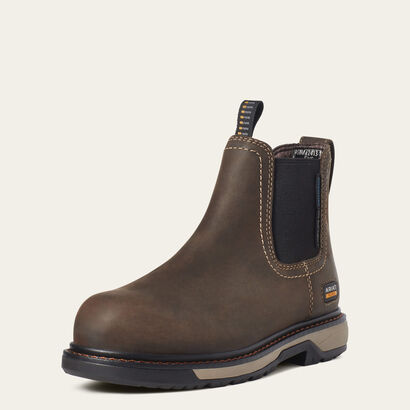






More About Women’s Work Boots
Women’s Work Boots
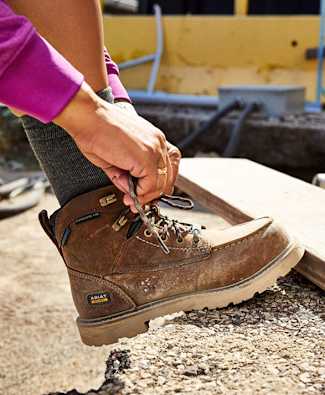
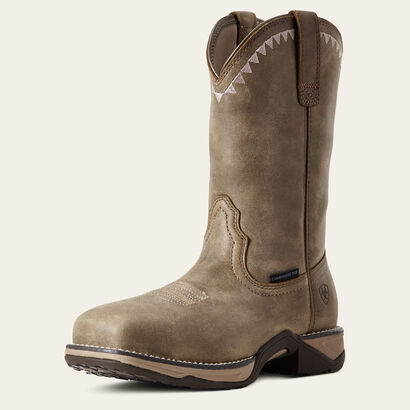
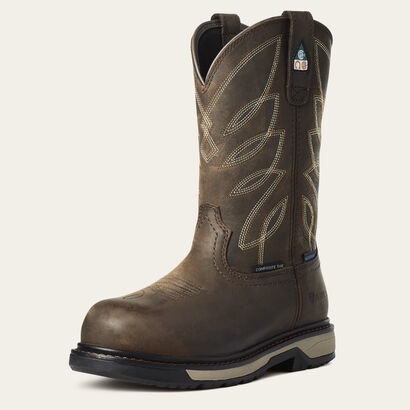
Ariat Women's work boots are job-ready footwear designed to support, cushion, and provide traction for women working in demanding indoor or outdoor environments. Depending on the job, they may include safety toes, waterproof construction, insulation, cooling materials, or other workplace-specific features; Best Summer Work Boots explains how airflow, materials, and job conditions affect warm-weather selection.
How do you choose women’s work boots?
Choose women’s work boots by matching the boot’s safety specifications, construction, closure, and weather protection to your job—not by selecting every available feature. Start with employer or worksite requirements, including whether you need steel, composite, or soft toes; electrical-hazard, static-dissipative, or non-metallic construction; and oil-resisting or slip-resistant outsoles.
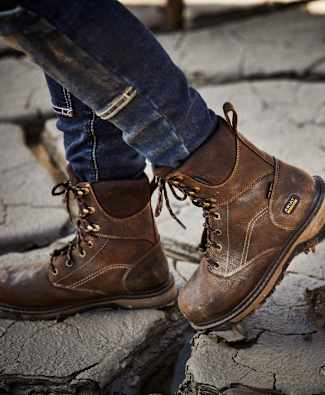
Lace-up boots allow more adjustment through the instep and ankle, while pull-on and slip-on styles offer quicker on-and-off convenience. Waterproof construction is useful for regular exposure to rain, mud, wet grass, or snow, but a more breathable boot may be preferable for hot, dry, or primarily indoor work.
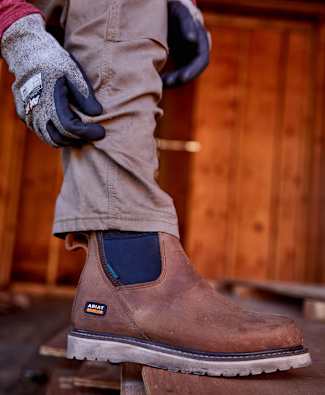
For a pull-on option with waterproof construction and a composite toe, compare the Rebar Wedge Chelsea Waterproof Composite Toe Work Boot. The Anthem Waterproof Composite Toe Work Boot provides another waterproof, non-steel safety-toe option to evaluate against your worksite requirements.
Women's sizing is generally the best starting point, but foot shape, width, and available features may lead some shoppers to compare men's styles. Use How to Buy Men's Work Boots as a Woman before converting sizes, and review Men's Farm and Ranch Boots if that category better matches your work and fit needs.
How should women’s work boots fit?
Women’s work boots should feel secure through the heel and midfoot without pinching, while leaving enough room for the toes to move without touching the front, sides, or top of a safety cap. About a thumb’s width between the longest toe and the front of the boot is a useful starting check, but heel security, width, and toe-cap clearance must also feel right.
Try boots on later in the day, when feet may be more swollen, and wear the same work socks and orthotics you plan to use on the job. Walk, bend, climb stairs, and stand on an incline if possible. Minor heel movement may settle as leather flexes, but painful pressure, numbness, toe contact, or significant sliding should not be treated as normal break-in.
This category currently includes women's sizes 5.5–12 and B-Medium and C-Wide options, although availability varies by style. Start with your usual size, consult the individual size chart, and consider changing width before automatically sizing up or down. For a fuller fitting checklist, see How Should Work Boots Fit?.
Which work-boot features and technologies should you look for?
A safety toe helps provide added protection from workplace impact or compression hazards, but the selected style must meet the standards required by your employer or worksite. Steel toes offer traditional protection, while composite toes provide a non-steel alternative; neither should press against the toes when the boot fits correctly.
Waterproof construction helps limit moisture entry during wet work, while insulation is intended for colder conditions. Slip-resistant outsoles are designed to improve traction, but no outsole is slip-proof, so tread and required safety specifications should be matched to the work surface.
ATS® technology is designed to help provide ergonomic support and stability during long periods on your feet. 4LR™ technology provides lightweight support and cushioning. VentTEK™ technology uses ventilated materials to encourage airflow in warmer conditions. Because technologies and certifications vary, confirm every required feature on the individual product page before purchase.
How do you care for women’s work boots?
Remove loose dirt after wear, clean the boots with products appropriate for their materials, and let them air-dry away from direct heat. For leather boots, use a soft brush or damp cloth, then apply a compatible leather conditioner only as directed; excessive heat or unsuitable cleaners can dry, stain, or damage the material.
Remove insoles and loosen laces to improve airflow after wet or demanding shifts. Waterproof boots still require regular cleaning, and treatments should be compatible with their membranes and finishes. The Rebar Lift Waterproof Work Boot is a waterproof example for which shoppers should follow the specific product instructions and care guidance rather than assuming all waterproof boots are maintained identically.
Always follow the care directions for the specific style. Inspect the outsole, seams, laces, upper, and safety-toe area regularly, and replace footwear when wear or damage prevents it from fitting securely or meeting required workplace standards.
Ariat was founded to bring athletic-footwear technology to equestrian boots and continues to apply that performance-focused approach to work footwear. Ariat women’s work boots combine job-specific options with cushioning, support, weather protection, and safety-minded construction built for long days in demanding environments.
Frequently Asked Questions About Women’s Work Boots
What are women's work boots used for?
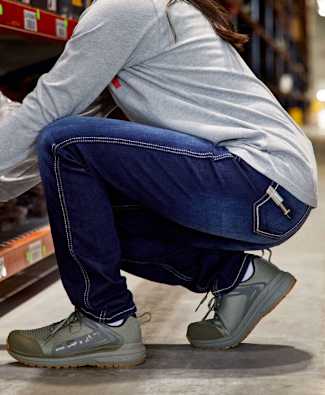
Women’s work boots are designed for demanding jobs where support, traction, durability, weather protection, or workplace-rated toe protection may be needed. Available styles serve construction, manufacturing, warehouse, electronics, farm, and ranch environments.
Should women buy women's or men's work boots?
Women’s sizing is usually the best starting point because its proportions may provide a more suitable heel and forefoot fit. Women with wider feet or different feature needs can compare men’s styles using a reliable size conversion guide.
How should steel-toe work boots fit?
Steel-toe boots should hold the heel and midfoot securely while leaving the toes free from contact with the cap’s front, sides, and top. Test them with work socks later in the day and reject painful pressure immediately.
Do women's work boots need to be waterproof?
Waterproof boots are useful for frequent rain, mud, snow, wet grass, or outdoor work. They are not necessary for every job; in hot, dry, or indoor conditions, breathability may matter more after required safety features are satisfied.
Is a steel toe or composite toe better?
Neither toe type is universally better. Choose according to employer requirements, applicable safety standards, work environment, weight preference, and metal restrictions. Regardless of material, the cap should never rub or compress the toes.
How often should women's work boots be cleaned?
Brush off dirt after each demanding or muddy shift and perform deeper cleaning as needed for the material. Air-dry boots away from direct heat, use compatible care products, and inspect their seams, soles, uppers, and safety-toe areas regularly.