


230 items
230 items
230 Results
In 73+ Carts


In 60+ Carts





In 65+ Carts


In 43+ Carts




In 61+ Carts


In 46+ Carts




In 45+ Carts


In 42+ Carts


More About Men's Work Boots
Men's Work Boots
Ariat Men's work boots are job-ready footwear designed to support the feet and provide task-appropriate durability, traction, and protection during demanding work. Options range from Construction Boots for active jobsites to Farm and Ranch Boots built for agricultural and outdoor tasks.
How Do You Choose Men's Work Boots?
Choose men's work boots by matching the boot to your workplace hazards, walking surface, weather, required safety standards, and preferred closure. The Getting Started in the Trades Workwear Guide explains the protective and performance features to consider, while What Are the Best Construction Boots? offers additional guidance for jobsite conditions.
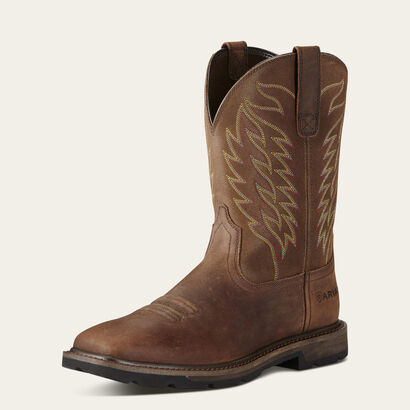
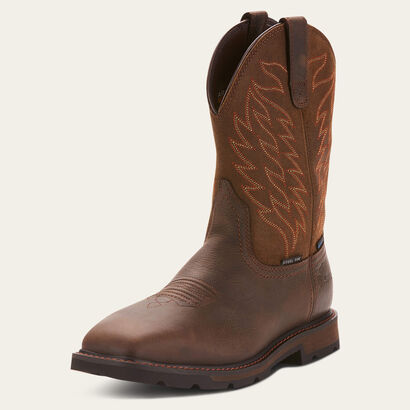
Select a safety toe only when your work or employer calls for it, and confirm the product's listed certification rather than assuming every protective toe meets the same requirements. The Groundbreaker Wide Square Toe Steel Toe Work Boot is a steel-toe option with a wide square toe, while the Rebar Wedge Chelsea Waterproof Composite Toe Work Boot combines a composite toe with waterproof construction and a pull-on Chelsea profile.
Also consider the surface underfoot. Deeper tread can be useful on loose soil or mud, while outsole designs intended for concrete and other hard surfaces may prioritize stability and long-wearing comfort. Lace-up boots allow more fit adjustment; pull-on and slip-on styles prioritize quick entry.
How Should Men's Work Boots Fit?
Men's work boots should feel secure through the heel and midfoot without pinching, with approximately 1/2" between the longest toe and the front of the boot. Your toes should move naturally without touching the end, top, or sides of a safety cap, and the boot's flex point should align with the ball of your foot; see How Should Work Boots Fit? for a complete try-on guide.
For a first steel-toe fitting, stand, walk, climb stairs, kneel, and test an incline if possible. Your toes must not strike the rigid cap, but excess room that lets the foot slide forward is also a poor fit. Do not rely on break-in to create more space inside a steel toe.
Try boots later in the day with the work socks and orthotics you normally use, since feet can swell during a shift. Category sizes may range from men’s 3 to 18, with B narrow, D medium, EE wide, and 4E options shown on this page, but availability varies by style. Always check the size chart and width choices for the specific boot.
Which Work-Boot Features Matter Most?
Waterproof construction helps keep feet dry in wet, muddy, or outdoor conditions, but it may be unnecessary for consistently dry work where airflow is the greater priority. Breathable Work Boots are designed to help manage heat during long workdays, while waterproof styles suit regular exposure to rain, puddles, or mud.
ATS® technology is designed to support stability during long periods on your feet. 4LR™ technology is designed to provide comfort and stability, while Shock Shield® technology helps diffuse heel-strike impact. VentTEK™ combines ventilated panels or cooling mesh with boot construction to promote airflow, and the BOA® Fit System provides dial-based fit adjustment on equipped styles.
Slip-resistant outsoles are designed to improve traction on specified surfaces, but no boot is slip-proof. If your job involves electrical hazards, choose only footwear carrying the appropriate rating for the work; browse EH-Rated Boots and confirm each product's listed safety specifications and your employer's requirements.
How Do You Care for Men's Work Boots?
Remove loose dirt after wear, wipe the boots with a damp cloth, and let them air-dry away from direct heat. Before applying cleaner, conditioner, or waterproofing treatment, confirm that it is compatible with the boot's leather, membrane, outsole, and other materials; review the listed construction of a specific style such as the Groundbreaker Work Boot before treatment.
Condition compatible leather as needed to help limit drying, but avoid saturating it or coating outsoles with conditioner. Regularly inspect the tread, laces, seams, lining, and safety-toe area for damage or separation. Follow the care instructions for the specific style and replace boots that no longer meet workplace requirements.
Ariat was founded to bring athletic-footwear innovation to riding boots and applies that performance-focused approach to work footwear. Ariat men’s work boots combine Western roots with job-specific options for construction, agriculture, warehouses, utilities, industrial settings, and other demanding environments.
Frequently Asked Questions About Men's Work Boots
What are men's work boots used for?
Men’s work boots are designed for demanding jobs that call for durable footwear, stable support, task-appropriate traction, or specified protection. Suitable features depend on the worksite, surface, weather, employer requirements, and hazards present.
What should I look for when fitting a steel toe boot for the first time?
Keep approximately 1/2" in front of your longest toe and make sure no toe touches the rigid cap while walking, kneeling, or using stairs. The heel should remain secure, and the sides should not pinch.
Should my first work boot be waterproof?
Choose waterproof boots if you regularly work in rain, mud, puddles, or other wet conditions. For consistently dry or hot workplaces, a breathable or water-resistant style may provide better airflow while still meeting the job’s requirements.
Can women wear men's work boots?
Yes, if the men’s boot fits securely and provides the required protection. Men’s medium width is commonly D, compared with B for women’s medium, so check heel security, arch placement, toe room, and the style’s size chart.
How often should work boots be cleaned and conditioned?
Brush off heavy dirt after each wear and clean the boots whenever residue builds up. Condition compatible leather when it begins to look dry, but follow the specific product instructions because membranes, finishes, and non-leather materials require different care.