


Work
Safety Toe: Which Is Right for Your Job? Steel vs. Composite vs. Carbon
Steel, composite, or carbon? There’s no single best safety toe, and that’s by design. Ariat builds work boots with all three because the right protection should account for more than the hazard in front of your toes. Weight, temperature, metal requirements, boot profile, and how you move through a shift can all influence which safety toe makes sense for the job.
What doesn’t change is the standard of protection. All Ariat steel, composite, and carbon composite safety-toe work boots meet ASTM F2413 requirements for impact and compression. A carbon or composite toe isn’t a step down in protection simply because it weighs less than steel. The differences are in how each material performs in the environments where you work.
Find the Best Safety Toe Work Boots for Your Job
Already know what you need? Jump to our Ariat safety toe picks by work environment and need:
- Best Steel Toe Work Boots for Outdoor Work
- Best Steel Toe Work Boots for Indoor Work
- Best Composite Toe Work Boots for Outdoor Work
- Best Composite Toe Work Boots for Indoor Work
- Best Lace-Up Carbon Composite Toe Work Boots
- Best Pull-On Carbon Composite Toe Work Boots
- Best MetGuard Work Boots for Heavy-Duty Jobs
- Best Waterproof Safety Toe Work Boots

Steel vs. Composite vs. Carbon Toe: Quick Comparison
Feature | Steel Toe | Composite Toe | Carbon Composite Toe |
Weight | Heavier | Approximately 25% lighter than a typical steel toe | Lightest safety-toe option Ariat offers, approximately 11% lighter than a typical composite toe |
Protection level | ASTM-rated impact and compression protection | ASTM-rated impact and compression protection | ASTM-rated impact and compression protection |
Best for | Heavy-duty construction, manufacturing, welding, and industrial work | Security-sensitive environments, temperature extremes, workers seeking less weight | Active jobs, workers prioritizing lightweight protection, temperature extremes |
Metal-detector friendly | No | Toe itself is non-metallic | Toe itself is non-metallic |
Temperature conductivity | Conducts heat and cold | Does not conduct temperature like steel | Does not conduct temperature like steel |
The most important point is that all three toe types can meet the same safety standard. Choose based on your workplace requirements and the characteristics that matter most during your workday.
When Should You Choose a Steel Toe?
Steel toe work boots remain a practical choice for jobs where steel is required or preferred, as well as for workers who want a traditional safety-toe construction with a lower-profile shape. Because steel can be formed relatively thin while maintaining its protective structure, it works particularly well in boots where a slimmer safety-toe profile is useful.
Steel also has a long history in construction, manufacturing, welding, and heavy industrial environments. For workers in those fields, it remains a familiar and widely used form of toe protection.
There are tradeoffs to consider. Steel is heavier than Ariat composite and carbon composite toes, contains metal, and conducts temperature more readily. After prolonged exposure to extreme cold or heat, the toe cap can take on more of the surrounding temperature than a non-metallic option.
Choose steel toe when: Your employer requires or prefers steel, you prefer a traditional safety-toe construction, or a relatively slim toe profile is important to you.
For a closer look at how these safety-toe materials are designed and what to consider when choosing between them, see Know Your Safety Toe: The Right Work Boot Protection for the Job, featuring Jake Rivas, Head of Design for Ariat Footwear.
When Should You Choose a Composite Toe?
Composite toe work boots are a strong option when reducing weight, avoiding metal, or working through temperature extremes is a priority. Ariat composite toes are approximately 25% lighter than a typical steel toe, reducing the amount of weight built into the protective toe.
The non-metallic construction also makes composite useful in workplaces where workers pass through metal detectors or need a non-metallic safety toe. Composite does not conduct temperature the way steel does, so it can be particularly practical for outdoor work in very hot or cold conditions.
Keep in mind that a composite safety toe does not automatically mean the entire boot is metal-free. If your workplace requires completely non-metallic footwear, check the specifications for the complete style.
Choose composite toe when: You want lighter protection than steel, need a non-metallic toe, regularly work in hot or cold conditions, or pass through security screening as part of your workday.
Already know composite is right for you? See Best Composite Toe Work Boots: Top Picks for Comfort, Weather, and Work Conditions for recommendations by use case.
When Should You Choose a Carbon Composite Toe?
Carbon composite is the lightest safety-toe construction Ariat offers. It uses composite material reinforced with carbon fiber, allowing the protective toe to be engineered with about 11% less weight than a traditional composite toe while still meeting the same ASTM impact and compression requirements.
Like traditional composite, carbon composite contains no metal in the toe cap and resists temperature transfer. The main distinction is its more advanced lightweight construction.
Choose carbon composite when: Minimizing weight is a priority, your job involves frequent movement, or you want a slimmer non-metallic safety-toe option without giving up certified protection.
Do You Need Metatarsal Protection Too?
A safety toe protects the front of the foot, but some jobs expose a larger area to falling, rolling, or dropped objects. Met Guard boots add protection over the top of the foot, extending coverage beyond the safety toe.
This additional protection can be relevant in construction, welding, metal fabrication, manufacturing, mining, oil and gas, and other environments where heavier objects may strike the top of the foot. Ariat offers Met Guard work boots for workers who need this additional coverage.
This article focuses on choosing the right toe material. If your job also exposes the top of your foot to impact hazards, see Why Metatarsal Boots Are Essential for Trade Workers for a deeper look at Met Guard protection and when to consider it.
What Other Work Boot Safety Ratings Should You Check?
Toe material is only one part of choosing safety footwear. Ariat Work offers boots with a range of industry-recognized certifications and protective features for different work environments.
Depending on the style, those can include ASTM-rated safety toes, Electrical Hazard (EH), Puncture Resistant (PR), Metatarsal Guard (MT), Static Dissipative (SD), slip-resistance ratings, and 100% non-metallic construction. Select styles also carry certifications recognized in other markets, including Canada (CSA), Europe and the UK (EN ISO) and Australia and New Zealand (AS/NZS). Not every job requires every feature. Construction, agriculture, oil and gas, utilities, warehousing, manufacturing, and skilled trades can each present different hazards, and requirements may vary even between workers in the same industry. Check the individual boot specifications and confirm any required standards with your employer before choosing work footwear.

How to Choose a Safety Toe for Your Job
Rather than assigning one safety toe to an entire trade, start with the requirements and conditions that define your workday. Construction workers on two different job sites, for example, may need different footwear depending on employer requirements, weather, hazards, and how they move throughout a shift.
Does Your Employer Require a Specific Safety Toe?
If your workplace specifies steel, composite, carbon composite, or another form of protective footwear, choose a boot that meets that requirement. Employer and job-site safety requirements should come before preferences around weight, profile, or toe material.
Is Reducing Weight a Priority?
Consider composite or carbon composite. Compared with a typical steel toe, Ariat’s composite construction reduces toe weight by approximately 25%, while carbon composite goes even further at approximately 11% lighter than a typical composite toe. Less weight in the toe can be worth considering for shifts that involve frequent walking, climbing, kneeling, or changing positions.
Do You Work in Extreme Heat or Cold?
Composite and carbon composite toes do not conduct temperature like steel. That can make a non-metallic safety toe a practical choice for workers who spend prolonged periods in very hot or cold environments.
Do You Pass Through Metal Detectors at Work?
Composite and carbon composite safety toes contain no metal, but that does not necessarily mean the entire boot is metal-free. If your workplace requires completely non-metallic footwear, look for a style specifically identified as 100% non-metallic or metal-detector friendly.
Do You Prefer a Traditional, Lower-Profile Safety Toe?
Consider steel. Steel can be formed relatively thin while maintaining its protective structure, making it a practical choice for workers who prefer a more traditional safety-toe profile. It may also be the required or preferred material in some workplaces.
Does Your Job Require Protection Beyond the Safety Toe?
Toe material is only one part of the decision. Hazards to the top of the foot may call for Met Guard protection, while wet conditions can make waterproof construction important. Your workplace may also require Electrical Hazard (EH), Puncture Resistance (PR), Static Dissipative (SD), slip resistance (SR), or other protective features, so check the complete boot specifications against your job requirements.

Best Ariat Safety Toe Work Boots by Job and Need
Once you've identified the right safety-toe construction, consider the rest of the boot. Indoor and outdoor work, shift length, weather, movement, and additional protection can point toward different styles even within the same toe category.
Best Steel Toe Work Boots for Outdoor Work
The Activator Waterproof Steel Toe Work Boot is a strong steel-toe option for long shifts in outdoor environments. Waterproof construction helps address changing weather and wet ground, while the steel safety toe provides ASTM-rated impact and compression protection in a traditional protective profile.
Best for: Construction, outdoor work, long shifts, wet conditions, workers who prefer steel toe protection

$209.95
Lightweight yet durable, Activator delivers the cushioning and stability you need for long work days. Built to perform in outdoor conditions, and versatile enough to wear anywhere.
Best Steel Toe Work Boots for Indoor Work
The Buckeye Steel Toe Work Shoe brings steel-toe protection into a work-shoe construction suited to indoor environments. Its lower-profile design makes it an option for workers spending long shifts on factory, warehouse, and other indoor floors without requiring the coverage of a traditional work boot.
Best for: Factories and warehouses, manufacturing, indoor work, long shifts on hard floors

$114.95
The easy comfort of your favorite shoe with the protection of a steel toe. Built for indoor environments, Buckeye Safety has a slip-resistant outsole and the long-lasting cushioning you need for working long shifts on hard floors.
Best Composite Toe Work Boots for Outdoor Work
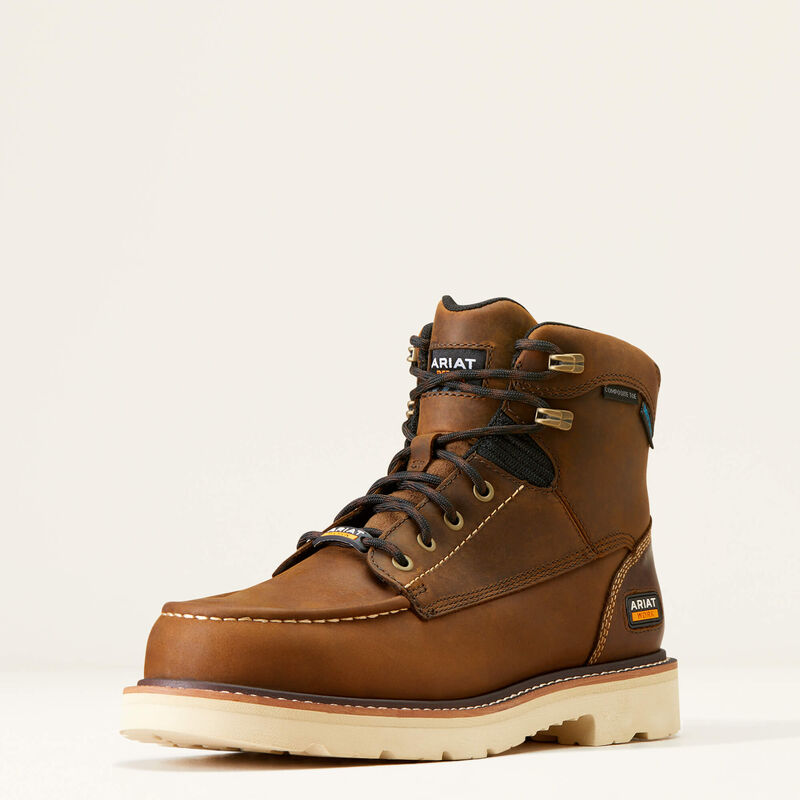
The Rebar Lift 6" Waterproof Composite Toe Work Boot pairs a lightweight composite safety toe with waterproof construction for outdoor work. Its six-inch lace-up profile is built for workers who want daily mobility while still getting weather protection and ASTM-rated toe protection.
Best for: Construction, outdoor trades, wet job sites, workers prioritizing lighter safety-toe protection
$199.95
Lightweight yet durable, Rebar® Lift delivers the cushioning and stability you need for long work days. Built to perform in outdoor conditions, and versatile enough to wear anywhere.
Best Composite Toe Work Boots for Indoor Work
The Outmatch Mid Composite Toe Work Boot gives workers a lighter, non-metallic safety-toe option for daily indoor work. Its mid-height profile suits workers who spend their shifts moving through warehouse, manufacturing, and other indoor environments where composite protection is preferred.
Best for: Factories and warehouses, manufacturing, indoor trades, workers looking for a lightweight daily safety toe

$144.95
Street-ready style, jobsite-proven durability. Set on a long-lasting, slip-resistant sole, Outmatch keeps you safe and steady on warehouse and factory floors.
Best Lace-Up Carbon Composite Toe Work Boots
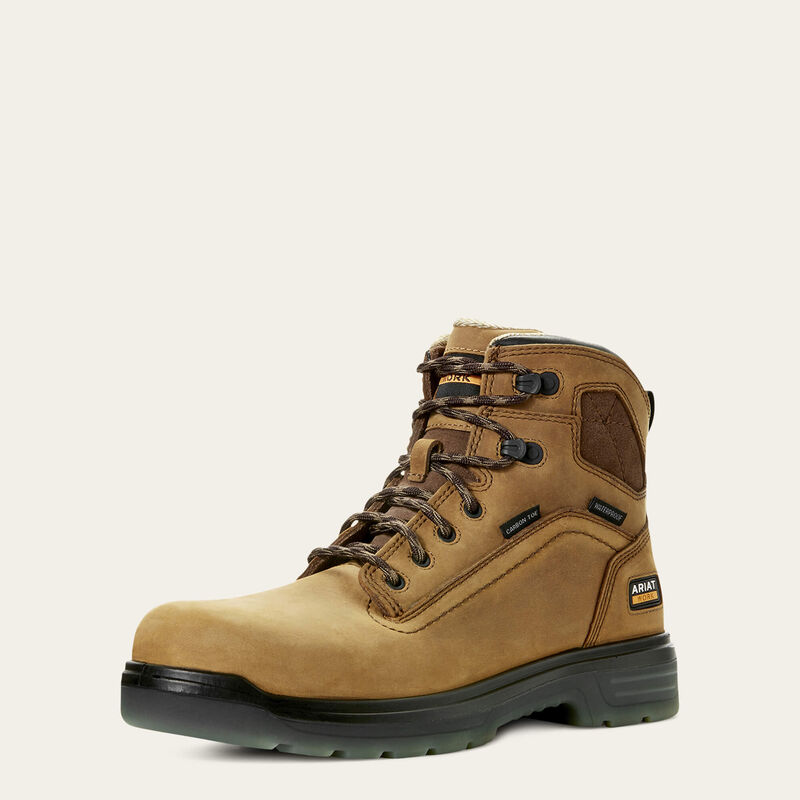
The Turbo 6" Waterproof Carbon Toe Work Boot combines lightweight carbon composite toe protection with the secure fit of a six-inch lace-up boot. Waterproof construction makes it versatile for changing job-site conditions, while the carbon composite toe helps minimize weight for workers who stay active throughout a shift.
Best for: Construction, active trades, outdoor work, workers prioritizing lightweight lace-up protection
$174.95
Serious comfort for long days on your feet, Turbo delivers the all-day cushioning you need on hard surfaces. Built to flex with every step, it’s ideal for construction, factory, warehouse, or farm and ranch work.
Best Pull-On Carbon Composite Toe Work Boots
The WorkHog XT Patriot Waterproof Carbon Toe Work Boot is a pull-on option for workers who want lightweight carbon composite protection in a Western work boot profile. Its WorkHog XT construction is suited to demanding outdoor environments, while waterproof protection adds utility in changing weather.
Best for: Oil and gas, long shifts, outdoor work, workers who prefer a pull-on carbon toe boot

$259.95
The WorkHog® XT delivers maximum side-to-side stability with best-in-class cushioning and shock absorption. Extremely supportive and durable, it delivers lasting comfort in harsh outdoor work environments and oil and gas exploration.
Best Met Guard Work Boots for Heavy-Duty Jobs
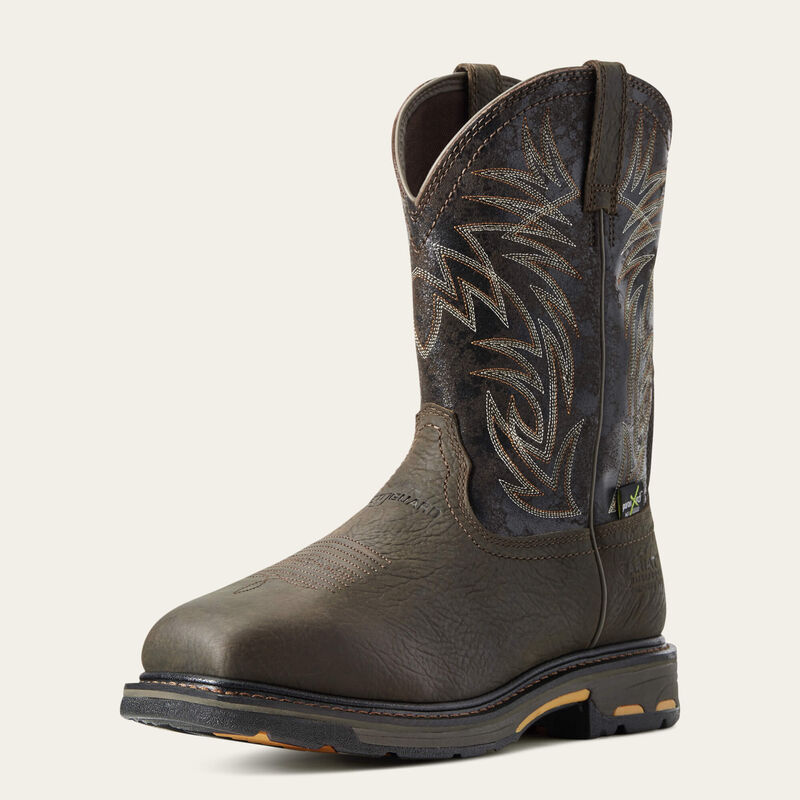
The WorkHog Wide Square Toe MetGuard Waterproof Composite Toe Work Boot provides composite safety-toe protection plus coverage over the metatarsal area for jobs where hazards extend beyond the toes. Waterproof construction and the pull-on WorkHog profile make it suited to demanding outdoor and industrial environments.
Best for: Oil and gas, heavy industrial work, impact hazards, jobs requiring metatarsal protection
$289.95
The WorkHog® delivers exceptional side-to-side stability with cushioning and shock absorption. Loaded with comfort and durability, it's designed to withstand harsh outdoor work environments and oil and gas exploration.
Best Waterproof Safety Toe Work Boots
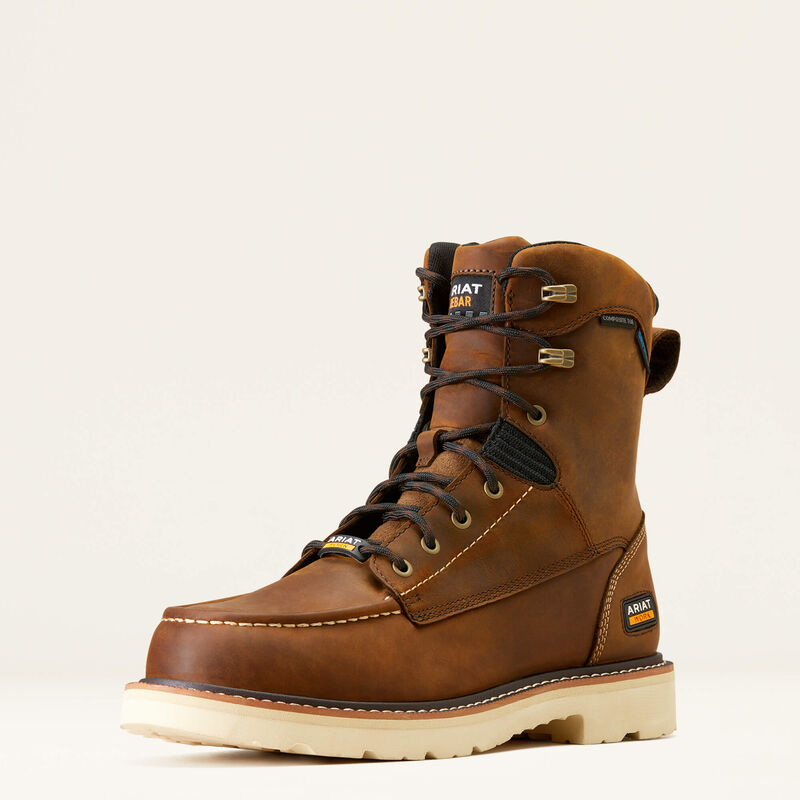
The Rebar Lift 8" Waterproof Composite Toe Work Boot offers the same combination of waterproof construction and lightweight composite toe protection found in the 6" Rebar Lift, but with a taller eight-inch shaft for additional coverage in outdoor conditions.
Best for: Construction, wet jobsites, outdoor work, workers needing waterproof safety-toe protection
$209.95
Lightweight yet durable, Rebar® Lift delivers the cushioning and stability you need for long work days. Built to perform in outdoor conditions, and versatile enough to wear anywhere.
The Right Safety Toe Starts With the Job
There’s no single safety-toe material that’s right for every worker or trade. Steel, composite, and carbon composite safety toes can all provide ASTM-rated impact and compression protection, but the right choice depends on your specific job requirements, work environment, and how you move through your shift. Start with any safety standards set by your employer or jobsite, then consider factors like weight, temperature, metal requirements, and the additional protection you need from the rest of your boot.
Explore Ariat’s Men’s Safety Toe Work Boots and Women’s Safety Toe Work Boots to find options built for different trades, work environments, and protection needs.


