

Ariat Experts
Ariat Safety Toe Technology: Choosing the Right Work Boot Protection for the Job
When it comes to choosing the right work boot, safety isn’t a luxury; it’s essential. And protection starts at the toe. Whether you're working long shifts on concrete, navigating an active job site, or braving cold outdoor conditions, the type of safety toe in your boots makes a big difference.
This article is part of our Ariat Work Experts series, where our team shares insights on technology, fit, and performance to help you choose the right gear with confidence.
Ariat offers three industry-leading options: steel toe, composite toe, and carbon composite toe. Each one meets ASTM F2413-24 safety standards for impact and compression, delivering the same level of protection across all three. The difference comes down to how that protection is built into the boot—through material, weight, and how it performs in your work environment.
So how do you decide which one is right for you? This guide breaks down the features of each safety toe work boot to help you choose the best fit.
Gear Up with Ariat Work Experts
Before we break down your safety toe options, hear directly from the expert behind the boots. In this episode of Gear Up, Jake Rivas, Head of Design for Ariat Footwear, walks through the core differences between steel toe, composite toe, and carbon composite toe—and what makes each one right for the job.
Hi there, I'm Jake Rivas, Head of Design at Ariat Footwear. In today's episode of Gear Up, we're going to talk about protective footwear.
Let's start with the types of safety toes we offer. First, we have steel toe, composite toe, and carbon composite toe. They all meet ASTM standards 2413-24. That's a compression test and a drop load test.
What's great about a steel toe is you can get it thinner and lower profile. It really works well for holding the edges of a wide square toe. I would not recommend them if you are working in extreme cold conditions.
Next, let's talk about composite toes. Composite toes are about 11% lighter than steel, and because they don't conduct the cold, they're a great option for extreme cold environments.
Lastly, we have the carbon composite toe. It's actually stronger, slightly thinner, and a bit lighter than standard composite. However, because it uses carbon fiber, it does come at a higher price point. So it really comes down to weighing the trade-offs based on what you need.
Just know that you're always protected when you're wearing one of our boots.
Steel Toe: Classic Strength in a Slim Profile
“I need the toughest toe protection available. What’s going to hold up?”

If you work around heavy machinery, falling materials, or unpredictable hazards, steel toe work boots provide ASTM-certified protection in a durable, structured design suited for high-impact environments. They’re the original standard for a reason, offering high compression resistance and durability that lasts shift after shift. Steel toes also offer a lower profile, which fits especially well in wide square-toe boot designs. If your job puts your feet at risk from impact or heavy objects, steel-toe boots are the tried-and-true choice.
Temperature tip: Steel conducts temperature, so after extended time outside in extreme cold, the steel toe can take on the surrounding ambient temperature. For those who work outdoors in colder climates, this is worth noting. In prolonged freezing conditions, steel-toe boots can be slightly less ideal than non-metal alternatives unless they’re insulated properly.
If you’re working in the heat, check out our guide to The Best Summer Work Boots for Hot Weather.
Best for: Work environments where a structured, traditional safety toe design is preferred. One advantage of this construction is its slimmer profile. Because the material can be formed thinner than many alternative safety toe materials, it allows for a lower-profile fit. Whether you choose a cowboy boot style or a traditional lace-up design, the toe maintains a more streamlined shape compared to many other safety toe constructions.

$209.95
Lightweight yet durable, Activator delivers the cushioning and stability you need for long work days. Built to perform in outdoor conditions, and versatile enough to wear anywhere.

$179.95
Take a break from uncomfortable work boots. The Groundbreaker collection pairs just-right cushioning with versatile traction for an all-around boot that's best for construction, factory, warehouse, or farm and ranch work.

$114.95
The easy comfort of your favorite shoe with the protection of a steel toe. Built for indoor environments, Buckeye Safety has a slip-resistant outsole and the long-lasting cushioning you need for working long shifts on hard floors.
Composite Toe: Lightweight Comfort in Every Step
“I work outside in the snow. What will keep me warm?”

If you’re working in freezing temperatures or on cold surfaces, composite toe work boots are a smart choice. Unlike steel, composite materials do not conduct heat, which helps keep your feet warmer.
Since they aren’t made of metal, composite toe boots are roughly 11% lighter than steel toe options, which can reduce fatigue during long hours on your feet.
Another advantage is that they won’t set off security scanners and don’t conduct electricity. That makes them a strong choice for electricians or on any job site where non-metal safety footwear is required.
Temperature tip: Composite toes stay more comfortable in both extreme cold and heat, making them a reliable all-season option.
Best for: Cold-weather workers, and those looking for lightweight, protective boots that won’t weigh them down.

$239.95
The WorkHog® delivers exceptional side-to-side stability with cushioning and shock absorption. Loaded with comfort and durability, it's designed to withstand harsh outdoor work environments and oil and gas exploration.
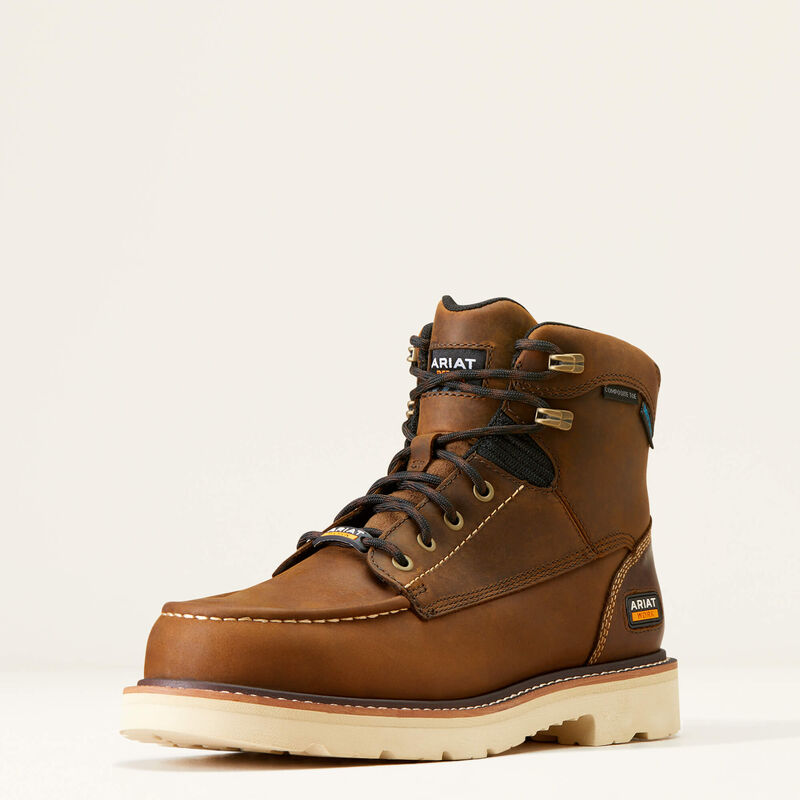
$199.95
Lightweight yet durable, Rebar® Lift delivers the cushioning and stability you need for long work days. Built to perform in outdoor conditions, and versatile enough to wear anywhere.
Shop All Composite Toe Work Boots
For tips on choosing a boot that fits just right, visit How Should Work Boots Fit?
Carbon Composite Toe: Advanced Protection with Minimal Bulk
“I’m climbing ladders and crawling in tight spaces. What’s the lightest safety toe?”

When agility and movement are part of your job, carbon composite toes stand out. Think of carbon composite toes as a high-performance evolution of a traditional composite toe. They’re built with a blend of advanced composite materials reinforced with carbon fiber, creating a thinner, lighter safety toe without sacrificing certified protection.
Because of the added carbon fiber, this safety toe can be engineered slimmer than standard composite options while maintaining the same ASTM-rated impact and compression protection. That streamlined design helps reduce weight and enhances flexibility, making it a strong choice for active job roles.
This is also ideal if you're on your feet all day and need a boot that keeps up without slowing you down.
Temperature tip: Like traditional composite, carbon composite resists temperature transfer, making it a great option for extreme heat or cold.
Best for: Professionals who demand lightweight gear, all-day comfort, and high-performance innovation on the job.

$259.95
The WorkHog® XT delivers maximum side-to-side stability with best-in-class cushioning and shock absorption. Extremely supportive and durable, it delivers lasting comfort in harsh outdoor work environments and oil and gas exploration.

$189.95
Serious comfort for long days on your feet, Turbo Duratread™ delivers the all-day cushioning you need on hard surfaces. Built to flex with every step, the Duratread™ sole stands up to heat while adding oil- and slip-resistance for tough jobs.
Shop all Carbon Composite Toe Work Boots
If all-day comfort is your priority, you’ll want to read What Are the Most Comfortable Work Boots?
Put to the Test: Safety That Stands Its Ground
At Ariat, every safety toe we build is backed by testing, real-world performance, and proven durability.
In a live product test, the Endeavor carbon composite toe boot withstood 50 pounds of dropped rock without damage. Then we took it one step further by placing someone inside the boot during testing. The results? No injuries.. Just real protection where it counts.
Choosing the Right Toe for Your Environment
Still not sure which safety toe is best for your job? Here’s a quick side-by-side to guide your decision:
Safety Toe Type | Weight | Temperature Resistance | Metal-Free | Best For |
Steel Toe | Heaviest | Moderate | No | Moderate climates, work environments where a slim-profile safety toe design is preferred |
Composite Toe | Medium | High | Yes | Cold climates, security-sensitive job sites, and long shifts requiring lighter weight |
Carbon Composite Toe | Lightest | High | Yes | Cold climates, high-mobility jobs, tight spaces, and professionals seeking premium lightweight performance |
Try Them Out for Yourself
The right safety toe depends on how you move, what you lift, and where you work. Try on a steel toe if your worksite is full of hazards. Lace up a composite toe if you're outdoors or in the cold. Slip into a carbon composite if you need ultralight protection that keeps up.
You'll feel the difference and know you're protected. And if you’re still deciding which style fits best, our guide on How Should Work Boots Fit? can help you get the right match.
Shop All Ariat Safety Toe Boots

FAQs: Work Boot Safety Toes
What’s the difference between soft toe and safety toe?
Soft toe boots do not include a reinforced protective cap in the toe box. They’re typically lighter and more flexible, making them ideal for jobs where there is no risk of impact or compression hazards.
Safety toe boots include a reinforced toe cap made from steel, composite, or carbon composite materials. They are designed to protect your feet from impact and compression.
What does ASTM F2413-24 mean?
ASTM F2413-24 is the safety standard for footwear with a protective safety toe. Boots that meet this standard are tested for impact and compression resistance to help protect against falling or heavy objects.
All Ariat steel toe, composite toe, and carbon composite toe boots meet ASTM F2413-24 requirements.
Are Ariat safety toe boots EH or SD rated?
Ariat designs work boots so that every style is either Electrical Hazard (EH) rated or Static Dissipative (SD) rated, regardless of whether they feature steel, composite, or carbon composite toes.
Most safety toe boots are EH-rated, providing a secondary source of protection against electrical shock in dry conditions.
SD-rated boots are built for more specialized environments, such as certain manufacturing settings, electronics work, or industries where static discharge must be controlled.
Every boot is either EH or SD rated, so always check the product specifications to ensure the right protection for your environment.
Do carbon composite toes break easily?
No. Carbon composite toes are built with advanced composite materials and reinforced with carbon fiber for extra durability.
Like steel and traditional composite toes, carbon composite toes must pass the same ASTM impact and compression standards. The difference is in weight and profile, not protection level.
Can I wear safety toe boots in winter?
Yes. All safety toe boots can be worn in winter, but the material choice matters.
Composite and carbon composite toes resist temperature transfer, which can make them more comfortable in extreme cold. Steel toes can reflect the ambient temperature, so insulated styles are recommended for colder climates and regions where freezing temperatures are common.
When do I need safety toe boots?
If your job involves the risk of heavy objects falling or rolling over your feet, safety toe boots are often required by safety guidelines or your employer.
Can safety toe boots be stylish?
Ariat designs safety toe work boots in a range of silhouettes, including classic cowboy boot styles, versatile Chelsea boots, traditional lace-up work boots, and even sneaker-inspired designs. That means you can choose a look that fits your style while still getting certified protection.
Steel toe options in particular can offer a slimmer profile and a classic Western look, but every safety toe category is built with performance and style in mind.
Do safety toe boots make your feet tired?
Safety toe boots can feel heavier depending on the material, but overall comfort depends on how the boot is designed.
Steel toes are slightly heavier, while composite and carbon composite options reduce weight, which may help minimize fatigue during long shifts. However, the biggest factors in all-day comfort are cushioning, arch support, stability, and shock absorption.
Ariat was founded on integrating athletic footwear technology into work and riding boots. Every safety toe style is engineered for maximum support, comfort, and durability, so you get certified protection without sacrificing performance on the job.