

Steel Toe Men's Work Shoes
38 items
38 items
38 Results






More About Steel Toe Men Work Shoes
Steel Toe Men Work Shoes
Ariat Men's steel toe work shoes are job-focused footwear with a rigid steel cap built to add protection around the toes in demanding work environments. They are part of the broader Men's Safety Shoes range and should be selected according to the hazards, policies, and safety specifications that apply to your workplace.
How Do You Choose Steel Toe Men Work Shoes?
Choose steel toe work footwear by matching its protection, height, traction, weather features, closure, and underfoot support to your job. Check the individual product specifications against employer requirements, then consider whether you work primarily on concrete, uneven outdoor ground, ladders, or wet and muddy surfaces; What Are the Best Construction Boots? offers additional guidance on evaluating job-site footwear.
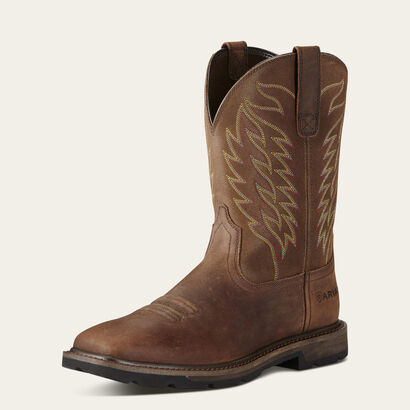
Lace-up shoes and boots allow fit adjustment across the instep, while pull-on and slip-on designs prioritize quick entry. A wide-square-toe style such as the Groundbreaker Wide Square Toe Steel Toe Work Boot may suit shoppers who need a roomier shape, but the steel cap should never press against the toes.
Color, coverage, and working conditions can narrow the options further. Compare Black Steel Toe Shoes for a versatile dark finish, Men's Steel Toe Boots for greater boot coverage, or 8-Inch Safety Toe Work Boots when the job calls for a taller work-boot profile.
How Should Steel Toe Men Work Shoes Fit?
Steel toe work shoes should feel secure at the heel and midfoot while leaving approximately 1/2" between the longest toe and the front of the shoe. Your toes should move without touching the front, sides, or top of the steel cap, and the footwear should not pinch, rub, or create painful pressure; see How Should Work Boots Fit? for a fuller fit walkthrough.
Try footwear on while standing and wearing the work socks you normally use, preferably later in the day when feet may be slightly larger. Walk, squat, and use an incline if available; your toes should not strike the cap, and your heel should remain secure without persistent lifting or rubbing.
Current filters show sizes that vary by style, including many men’s options from 7 through 14 and selected unisex listings from M 6/W 7.5 through M 15/W 16.5. Available widths include D-Medium, EE-Wide, and B-Narrow on eligible products. Always consult the size chart and availability on the individual product page rather than sizing up to solve pressure against the safety cap.
What Features Matter in Steel Toe Work Footwear?
Start with the required safety-toe specifications, then evaluate traction, weather protection, cushioning, stability, breathability, height, and closure for the surfaces and conditions you encounter. The Getting Started in the Trades: Workwear Guide provides additional context for matching protective workwear to a trade.
Shock Shield® technology is designed to diffuse heel-strike impact and support shock absorption. ATS® technology is designed to provide advanced stability, while 4LR™ technology supports comfort and stability underfoot. VentTEK™ technology uses cooling mesh to promote airflow in warmer conditions.
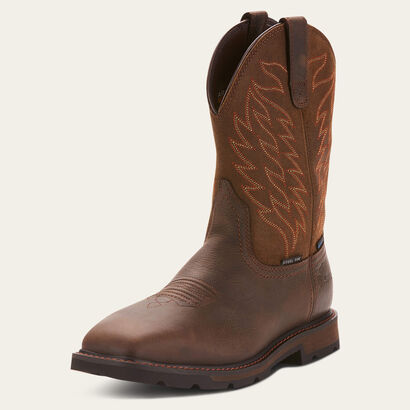
Slip-resistant outsoles are designed to improve traction on applicable surfaces, but no outsole is slip-proof. Waterproof construction helps keep feet dry in wet conditions, while the Ironside Square Toe Steel Toe Work Boot gives shoppers another square-toe steel-toe option to compare for job-site use. Confirm every feature and safety specification on the selected product page.
How Do You Care for Steel Toe Men Work Shoes?
Remove dry dirt after each wear, wipe the upper with a lightly damp cloth, and let the footwear air-dry away from direct heat. Because materials and waterproof construction vary, follow the instructions for the specific style; the Groundbreaker Chelsea Wide Square Toe Waterproof Steel Toe Work Boot is an example of a waterproof steel-toe design that may require different maintenance from a non-waterproof style.
Use a material-appropriate cleaner and condition leather only when the product instructions recommend it. Remove the footbed when appropriate to air out the interior, loosen or clean laces separately, and inspect the outsole, seams, upper, and exposed safety-toe area regularly. Replace footwear when damage could affect fit, traction, or its intended protective function.
Ariat was founded to bring athletic-footwear thinking and innovative performance design to equestrian footwear. That focus has expanded into work footwear built for long days in demanding environments, combining safety-minded construction with practical support, cushioning, traction, and durability features.
Frequently Asked Questions About Steel Toe Men Work Shoes
What are men's steel toe work shoes?
Men’s steel toe work shoes contain a rigid steel cap around the toe area and are intended for workplaces where added toe protection may be required. Always confirm the selected style’s specifications against your employer’s rules and job-site hazards.
How do steel toes compare with composite safety toes?
Steel toes use a metal cap and are often selected for demanding industrial work, while composite toes use nonmetal materials and may feel lighter. Either option must have specifications appropriate for the workplace; do not assume every safety-toe product meets every job requirement.
What should I look for when fitting a steel toe boot for the first time?
Leave approximately 1/2" between your longest toe and the front while keeping the heel and midfoot secure. Test the fit in normal work socks, and reject pressure, pinching, or contact with the steel cap during walking and squatting.
Are waterproof steel toe shoes appropriate for wet work?
They can be appropriate when the selected style combines waterproof construction, suitable safety specifications, and an outsole designed for the working surface. Waterproof does not mean slip-proof, so review product details and workplace requirements before choosing a pair.
How often should steel toe work shoes be cleaned and inspected?
Brush or wipe off dirt after wear and inspect the footwear regularly for worn tread, separated seams, damaged uppers, or exposed safety-toe components. Cleaning frequency depends on conditions, but mud, chemicals, and heavy soil should not remain on the footwear unnecessarily.