

Work Leather Boots
175 items
175 items
175 Results

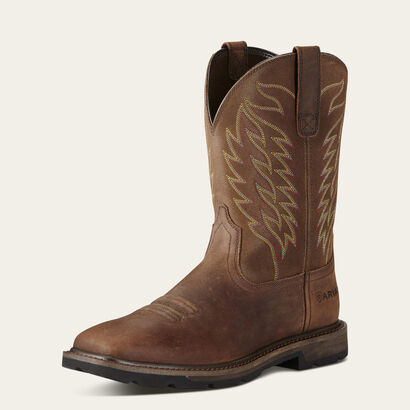

In 98+ Carts
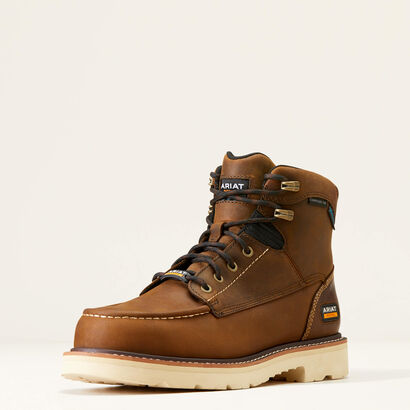

In 42+ Carts


In 57+ Carts
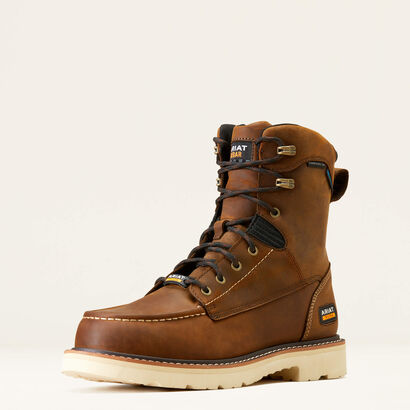


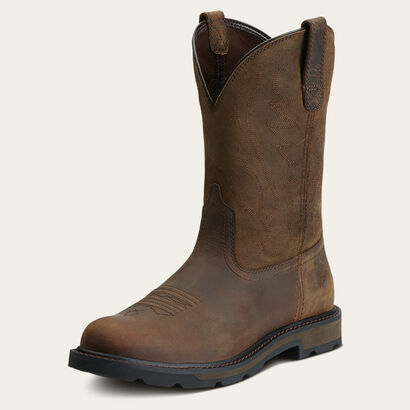


In 50+ Carts









More About Work Leather Boots
Work Leather Boots
Leather work boots are jobsite footwear made with leather uppers and work-focused soles to help support long shifts, abrasive surfaces, and trade-specific safety needs. Ariat work leather boots can be filtered by gender, safety toe, waterproofing, shaft height, toe shape, and width, or navigated by job type through Work By Trade.
How do you choose leather work boots?
Choose leather work boots by matching the boot to the jobsite: safety toe for impact-prone work, waterproof construction for wet ground, slip-resistant outsoles for changing surfaces, and taller shafts when you want more coverage around the ankle and lower leg. For welding and metalwork, start with boots built for high-heat trade environments and compare options in High Heat Boots against your jobsite's safety requirements.
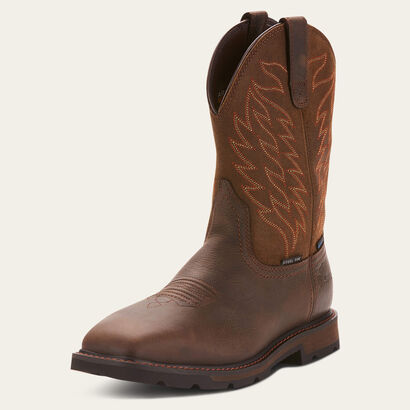
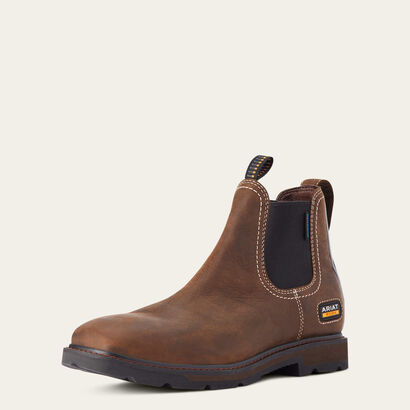
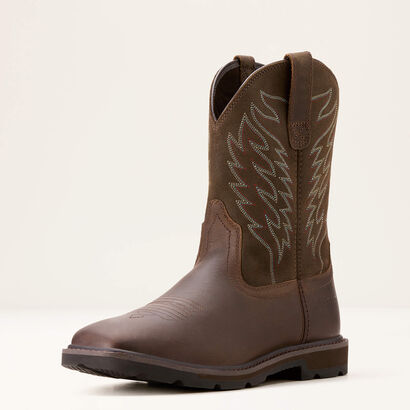
For a straightforward leather work boot, the Groundbreaker Work Boot is a practical place to start. If your crew requires protective toes, compare steel-toe options like the Groundbreaker Wide Square Toe Steel Toe Work Boot, or look at waterproof pull-on protection in the Groundbreaker Chelsea Wide Square Toe Waterproof Steel Toe Work Boot.
Pull-on styles can be a good fit for workers who want quick on/off convenience before and after a shift, and Men's Pull-On Work Boots narrows the selection to that easy-wearing format. For hot weather, high sun, or warm jobsite conditions, seasonal guidance in Best Summer Work Boots can help you balance coverage, airflow, and protection.
How should work boots fit?
Start with a secure heel, enough toe room to wiggle comfortably, and no pinching across the ball of the foot. Leather work boots should feel stable when you walk, bend, and climb, with room for the socks you actually wear on the job.
This category includes sizes from 4 to 18 depending on style, with width filters that may include B-Narrow, B-Medium, C-Wide, D-Medium, EE-Wide, and 4E. Take your natural foot measurements, check the size chart on the style you're considering, and use How Should Work Boots Fit for more detailed fit guidance before choosing your size and width.
Which features improve boot performance?
For durable work boots, look for leather uppers, reinforced jobsite features, and construction methods designed for long-term wear; Goodyear Welt Boots highlights a welted build associated with durability and resoling potential on select styles. For more detail on how materials and construction work together, Boots Built to Last explains what helps a boot hold up through demanding use.
ATS® technology helps support stability and comfort over long hours on varied ground. 4LR™ technology is designed to provide lightweight support and cushioning for everyday work. Shock Shield® technology helps diffuse heel-strike impact for added underfoot comfort. VentTEK™ technology uses cooling mesh panels to help promote airflow in warm conditions. BOA® fit technology is designed to help deliver a secure, adjustable fit with quick on/off dial control where featured. Duratread™ outsoles are formulated for wear resistance and flexibility.
How do you care for leather work boots?
Clean leather work boots regularly by brushing off dirt and wiping away mud before it dries into seams and creases. Let boots air-dry at room temperature, away from direct heat, which can dry out leather and affect the shape.
Condition leather as needed with a product appropriate for your specific boot finish, and always follow the care instructions on the style you own. If your boots have waterproof construction, keep the leather clean and conditioned so the upper can continue performing as intended in wet or muddy conditions.
Ariat was founded to bring athletic-shoe innovation to riding and work footwear, pairing heritage bootmaking with modern performance design. That purpose carries into work leather boots built for long days in demanding environments, from construction sites and service calls to ranch work, welding shops, and crew jobs that ask more from every step.
Frequently Asked Questions About Work Leather Boots
What are leather work boots used for?
Leather work boots are used for jobsite protection, support, and durability across trades such as construction, ranch work, welding, plumbing, and general crew work. They are built to handle long hours, rough surfaces, and changing weather better than casual footwear.
Are leather work boots better than synthetic work boots?
Leather work boots often offer strong abrasion resistance, structure, and long-term wear when properly maintained. Synthetic materials may offer lighter weight or specialized breathability, so the better choice depends on the job, climate, and required safety features.
Are Ariat leather work boots suitable for welders?
Some Ariat work boot styles are designed for high-heat trade environments, which can be relevant for welders and metalworkers. Always confirm the boot’s heat, toe, outsole, and workplace safety specifications against your employer’s requirements.
How should leather work boots fit?
Leather work boots should feel secure at the heel, roomy enough at the toe, and stable across the midfoot without painful pressure. Try them with work socks and check comfort while walking, crouching, and climbing.
Should I choose steel toe, composite toe, carbon toe, or soft toe?
Choose steel, composite, or carbon toe when your job requires protective toe coverage, and choose soft toe when that protection is not required. Steel toe is a traditional protective option, while composite and carbon toe options may reduce weight depending on the style.
What technologies should I look for in durable work boots?
Look for support, cushioning, traction, and construction features that match your workday. Ariat technologies such as ATS®, 4LR™, Shock Shield®, VentTEK™, BOA®, and Duratread™ are designed to help with stability, comfort, airflow, fit adjustment, or outsole wear depending on the boot.
How do I maintain leather work boots?
Brush off dirt, wipe away mud, air-dry naturally, and condition leather as needed. Avoid direct heat and follow the care instructions for your specific boot finish and waterproof construction.