

Men's Composite Toe Work Boots
91 items
91 items


In 122+ Carts

In 80+ Carts


In 46+ Carts


In 42+ Carts


In 43+ Carts













More About Men’s Composite Toe Work Boots
Men’s Composite Toe Work Boots
Ariat Men’s composite toe work boots use a nonmetal safety cap to help protect the toes in jobs that require protective footwear while offering a lighter-feeling alternative to many traditional steel-toe designs. Composite caps may use materials such as carbon fiber, aramid fiber, or reinforced plastic, but shoppers should always verify the safety rating listed for the specific boot and required by their employer.
How Do You Choose Composite Toe Work Boots?
Choose men’s composite toe work boots by matching the boot’s stated safety rating, outsole, weather protection, cushioning, ventilation, and closure to your work environment. Confirm workplace requirements first, then consider whether you spend the day on concrete, uneven ground, ladders, wet sites, or around temperature-sensitive equipment.
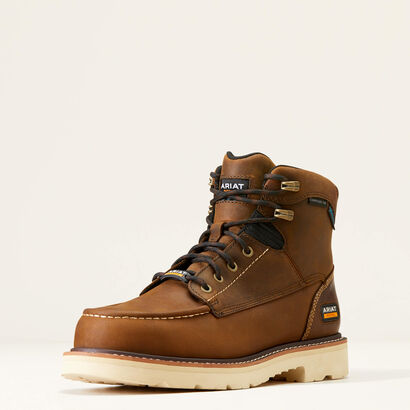
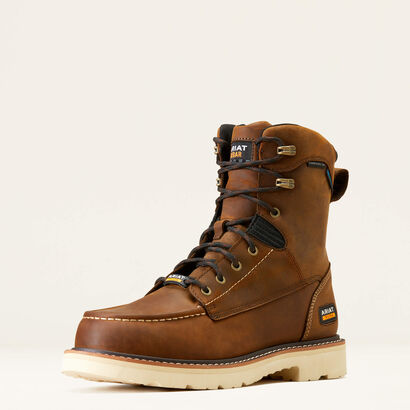
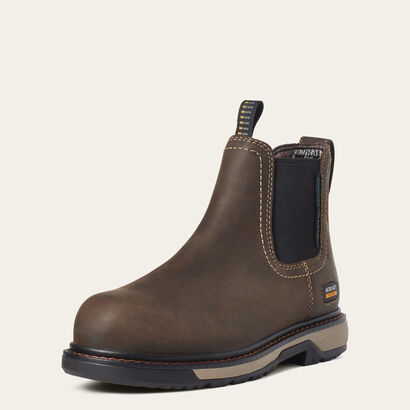
Lace-up boots allow more precise adjustment through the instep, while pull-on and Chelsea styles make on-and-off easier. The Rebar Wedge Chelsea Waterproof Composite Toe Work Boot combines a pull-on Chelsea profile with waterproof construction for shoppers who prioritize convenient entry and wet-weather coverage.
For hot conditions, prioritize airflow; for wet or cold settings, compare waterproof and insulated options. Workers moving between fields, barns, and equipment can also compare Men's Farm and Ranch Boots, while shoppers translating between men's and women's sizing can consult How to Buy Men's Work Boots as a Woman.
Finish the work kit with Men's Work Pants, choosing a leg opening that sits comfortably over the selected boot shaft without catching under the heel.
How Should Men’s Composite Toe Work Boots Fit?
Men’s composite toe work boots should leave approximately 1/2" between the longest toe and the front of the boot when standing in normal work socks. Toes should move freely without touching the front, sides, top, or safety cap, while the heel and midfoot should feel secure without painful pressure.
Walk, squat, and use an incline when possible to confirm that your toes do not strike the cap and your foot does not slide forward. A composite safety cap will not stretch during break-in, so do not expect a cramped toe box or pressure point to disappear with wear.
Available filters include men's sizes and multiple widths, including D-Medium, EE-Wide, and 4E on select styles. Measure both feet later in the day, fit the larger foot, review the size chart for the specific style, and read How Should Work Boots Fit? for additional heel, toe, and width checks.
Which Performance Features Matter Most?
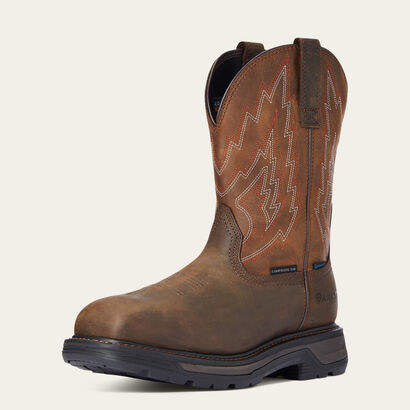
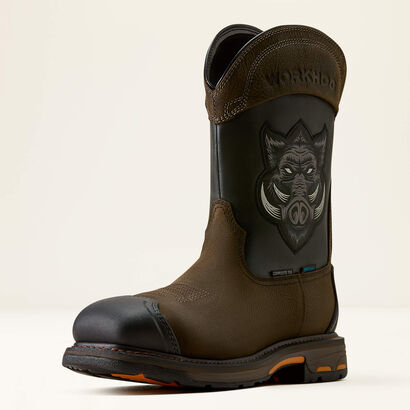
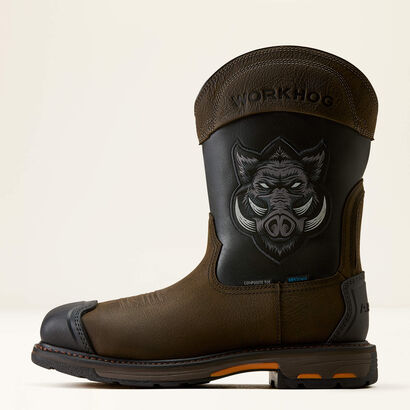
Waterproof construction is designed to help keep feet dry in wet conditions; the WorkHog Waterproof Composite Toe Work Boot is a pull-on option for shoppers prioritizing weather coverage and a composite safety toe.
VentTEK™ technology uses cooling mesh to encourage airflow in warm working conditions; the Rebar Flex Western VentTEK Incognito Composite Toe Work Boot is designed for shoppers seeking ventilation and flexible performance.
ATS® technology is designed to provide advanced stability during long periods on varied ground. 4LR™ technology is built to support comfort and stability. Shock Shield® technology is designed to diffuse heel-strike impact and aid shock absorption.
Outsole choice should reflect the work surface: look for the specific model's stated slip resistance, tread pattern, material, and heel profile rather than assuming one sole suits every job. When the work environment also requires flame-resistant apparel, compare Men's FR Jeans and follow the employer's complete protective-equipment policy.
How Do You Care for Composite Toe Work Boots?
Brush away loose dirt after wear, wipe the upper with a lightly damp cloth, and let the boots dry naturally away from direct heat. As with the other jobsite gear available through Men's Workwear, regular cleaning and inspection help reveal wear before the next shift.
Use a cleaner or conditioner compatible with the boot’s leather or synthetic material, and follow the product-specific care instructions. Avoid soaking the boots, apply waterproofing treatments only when suitable for the material, and inspect the outsole, seams, upper, and toe area for separation, deep cuts, or other damage that may affect serviceability.
Ariat was founded to bring athletic-footwear thinking to riding boots and has extended that performance-focused approach to footwear built for long days in demanding work environments. Ariat men’s composite toe work boots combine Western and work-boot profiles with modern safety-toe, stability, cushioning, waterproofing, and ventilation options.
Frequently Asked Questions About Men’s Composite Toe Work Boots
Are composite toe work boots the same as steel toe boots?
No. Composite toes use nonmetal materials, while steel toes use metal caps. Both may be made to meet recognized safety requirements, but certification varies by style, so verify the product rating and workplace policy. What Are the Best Construction Boots? explains additional jobsite considerations.
Are composite toe boots suitable for daily work?
Yes, when the specific boot’s safety rating and features match the job. For daily wear, compare cushioning, stability, outsole traction, weather protection, ventilation, weight, width, and closure instead of selecting a boot by toe material alone.
Are carbon toe and composite toe boots different?
A carbon toe is a type of composite safety toe made with carbon-based material. Both terms describe nonmetal alternatives to steel, but construction and certification differ by model, so always check the individual boot’s published specifications.
Should I choose waterproof composite toe boots?
Choose waterproof construction if you regularly work in rain, mud, standing water, or other wet conditions. For hot, dry environments, a ventilated style may feel more suitable; select according to the conditions encountered during most of your shift.
Do all composite toe work boots meet the same safety standard?
No. Toe material alone does not establish a boot’s complete safety rating. Check the specific model for its stated impact, compression, electrical-hazard, puncture, metatarsal, or other applicable ratings, then compare those details with employer requirements.