


Ariat Experts
Work Boot Innovation: An Ariat Expert Guide to Outsole Technology
When it comes to work boots, no detail matters more than the outsole. It’s the foundation that carries you through long shifts, rugged terrain, and unpredictable job sites. At Ariat, we’ve spent decades engineering outsoles that are purpose-built for the demands of hardworking industries like oil and gas, warehousing, and construction.
This article is part of our Ariat Work Experts series, where our team shares insights on technology, fit, and performance to help you choose the right gear with confidence.
In this feature, we’re proud to introduce Garron Patterson, Product Manager on the Ariat Work Footwear team. With deep expertise in design, development, and product testing, Garron ensures Ariat boots not only meet but also exceed the toughest industry standards. His insights reveal why Ariat stands at the forefront of innovation in work footwear and is trusted by tradespeople across every industry.
Gear Up with Ariat Work Experts
Before we get into the details, hear directly from the expert behind the outsole. In this episode of Gear Up, Garron talks us through the science and strategy behind our outsole designs.
Hi there, I'm Garron Patterson, part of the Work Footwear team here at Ariat International. Today we're going to talk about the extensive line of outsoles in our work footwear lineup.
One of the reasons we offer so many different work boots and outsole designs is because there is a boot for every job. We have people working in warehousing, oil and gas, and everything in between, including construction. Each of those environments requires something a little different.
Slip resistance, heat resistance, abrasion resistance, safety toe, waterproofing, static dissipating, electrical hazard protection, puncture resistance, met guard protection—we might need to make a longer video to cover all of that.
The outsole is the most important part of the boot. It's the part that contacts the ground all day and needs to be especially durable.
The first one we're going to talk about is the Big Rig. The Big Rig is our extended sizing platform, available up to size 18 EE. The outsole features a flared design, which increases surface contact through both the forefoot and the heel. It has an aggressive lug pattern and performs well in outdoor conditions like mud.
There is no other competition making an extended sizing platform quite like Ariat.
The next outsole we're going to talk about is the Intrepid. The Intrepid outsole is one of our few styles built on an anatomical last. An anatomical last follows the natural shape of the foot. You'll notice how it rises toward the big toe and slopes toward the pinky toe, matching human anatomy. This provides excellent comfort and a more accurate fit.
The Endeavor is a strong option for outdoor work. It's also built on an anatomical last but takes inspiration from outdoor hiking footwear.
Here we have the WorkHog outsole. The WorkHog is designed for workers in oil and gas and other heavy-duty environments. It uses a Duratread rubber outsole and features debris-release lugs that allow rocks, mud, and other materials to fall away as the boot flexes.
We test our outsoles in a wide range of environments and design them specifically for those conditions.
Finally, we have the Sierra Shock Shield®. The Sierra Shock Shield® is built for workers in oil and gas, high-heat environments, and other harsh outdoor conditions. The solid Duratread rubber outsole provides heat resistance, slip resistance, and abrasion resistance.
What Is the Outsole of a Work Boot?
The outsole is the foundation of a work boot: the bottom layer that makes direct contact with the ground. Its purpose is to provide traction, stability, and protection in demanding conditions. Outsoles are built from durable compounds and engineered with features like lugs for grip, channels for flexibility, and cushioning systems for comfort. At Ariat, the outsole is where every work boot begins, and it always combines safety with long-lasting performance.

Why Outsole Technology Matters
Depending on your job site, your outsole may need to deliver:
- Slip resistance on a variety of terrain and unpredictable surfaces
- Heat resistance for high-temperature environments. Ariat offers work boots have durable rubber outsoles, which are built to withstand heat exposure on demanding jobsites
- Abrasion resistance for increased durability in rough outdoor conditions and
- Electrical Hazard (EH) or Static Dissipating (SD) protection for industrial safety settings
- Puncture resistance for construction sites or metal-heavy environments
Ariat designs outsoles not as one-size-fits-all solutions, but as specialized tools tailored to each work environment. If you want to find the best fit for you, check out our guide on how work boots should fit.

The Big Rig: Built for Size, Built for Strength
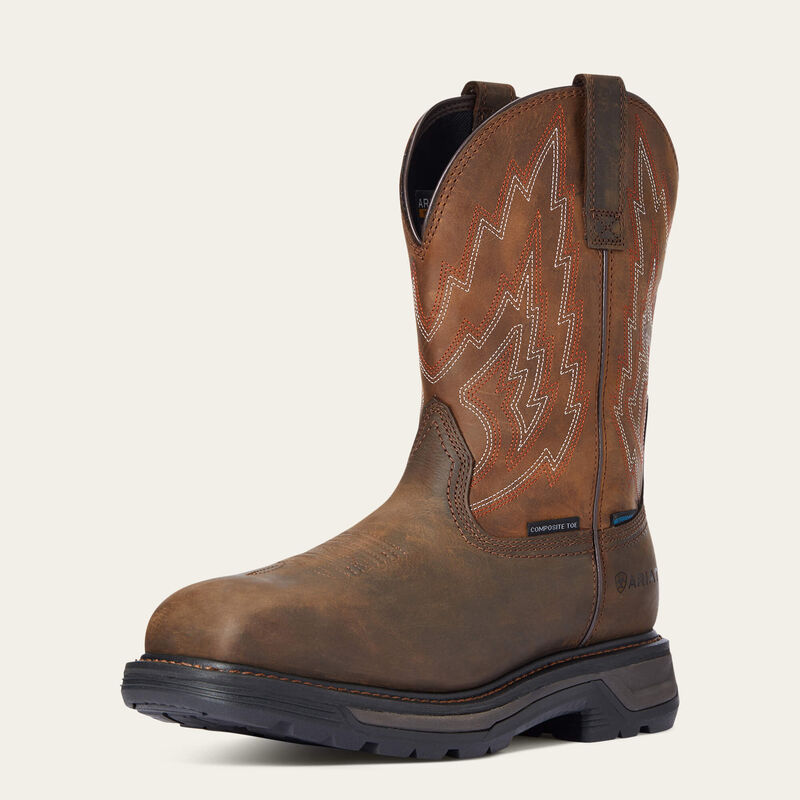
The Big Rig outsole is engineered for workers who need extended sizes, available up to size 18 EE. Its flare-outsole design increases surface contact at both the forefoot and the heel, enhancing stability on mud, uneven dirt, or gravel.
Big Rig boots are also one of the best options for individuals with wider feet and wider calves. Sizes range from Wide (EE) to Extra Wide (EEEE), providing measurable width expansion through the forefoot and heel. On pull-on styles, the shaft opening is also designed with a roomier circumference and slightly wider profile, allowing easier entry and a more natural fit for individuals with wider calves.
Slip Resistance Rating for Big Rig Outsoles: ASTM F2413-24 and ASTM F2892-24 SRO rated for slip resistance
$244.95
Big-time durability, wider widths, and extended sizes—Big Rig is built from the ground up for hard wear. One of our heaviest-duty boots, it stands up to harsh environments like oilfields and industrial sites, and features a roomier opening for quick, easy entry.
The Intrepid: Designed with Your Anatomy in Mind
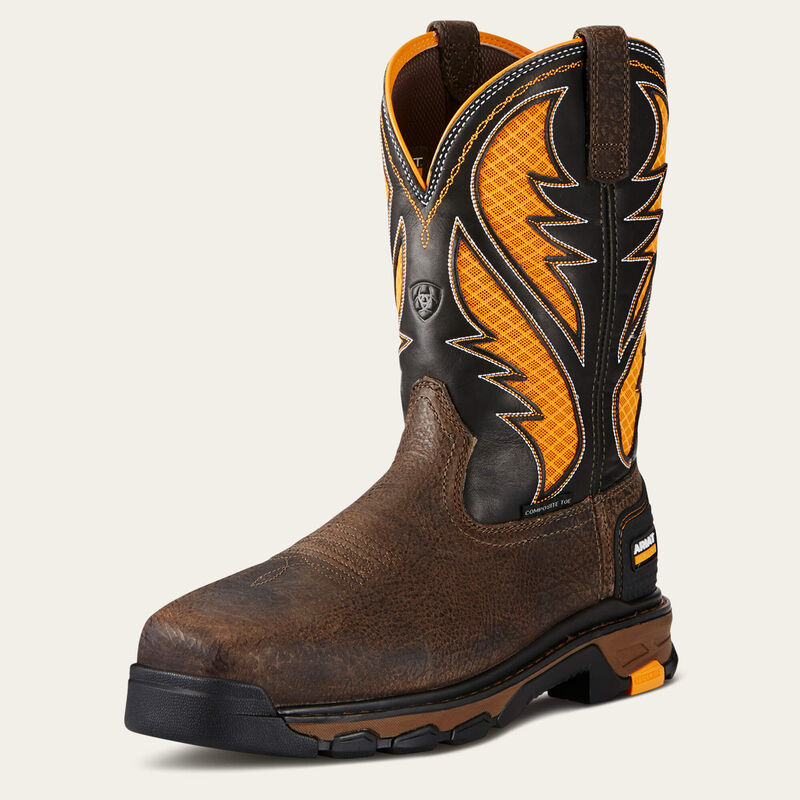
The Intrepid outsole is built on an anatomical last. That means that, unlike traditional flat lasts, the boot rises toward the big toe and slopes toward the pinky toe, mimicking the natural anatomy of your foot.
The result is precision alignment, enhanced stability, and exceptional comfort, even during long shifts on hard surfaces. This boot is built for demanding environments, from rugged outdoor terrain to indoor job sites with concrete floors, where consistent support and ergonomic stability are critical over extended hours.
Slip Resistance Rating for Intrepid Outsoles: ASTM F2413-24 SRO rated for slip resistance
Explore Intrepid Work Boots
$249.95
With groundbreaking SpiderTEK® technology delivering long-lasting support, rebound, and shock-absorption, Intrepid™ is tough enough for it all. The roomier toe box keeps feet comfortable while you kneel and lift, and extra stability makes it a great choice for rugged outdoor work environments or heavy-duty construction.
If all-day comfort is your top priority, see our guide to the most comfortable work boots.
The Endeavor: Outdoor-Inspired Work Performance
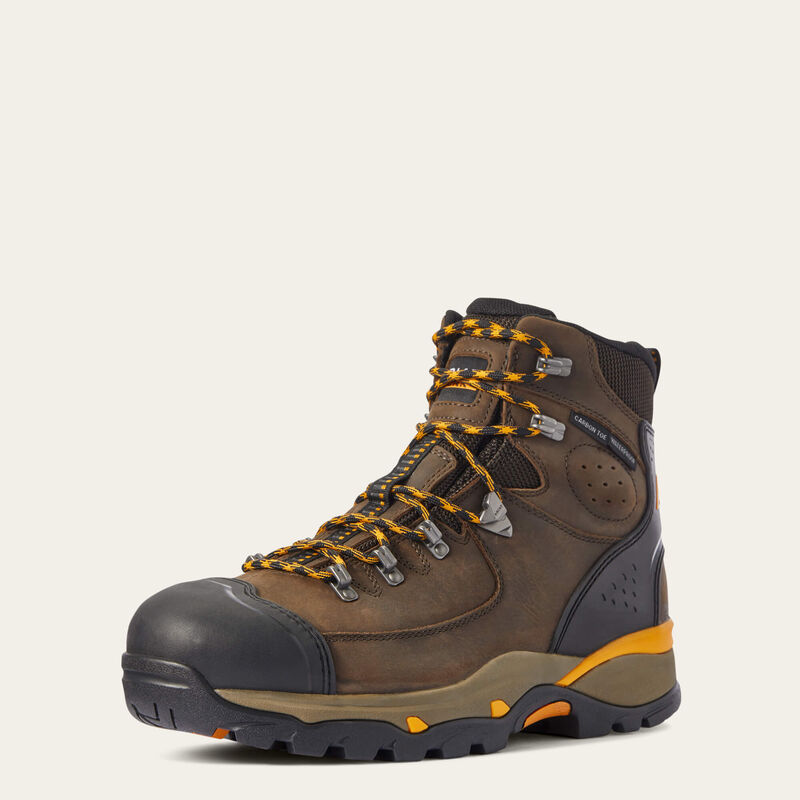
Also built on an anatomical last, the Endeavor outsole is inspired by outdoor hiking boots. This hybrid design combines rugged durability with comfort, making it a natural fit for outdoor tradespeople and construction crews working in uneven terrain.
Slip Resistance Rating for Endeavor Outsoles: ASTM F2413-24 and ASTM F2892-24 SRO rated for slip resistance
Discover Endeavor Work Boots
$199.95
A rock-solid boot for outdoor work and construction, Endeavor pairs full-range stability with durable outdoor traction. An anatomical shape keeps feet supported on the job, and a shock-absorbing insole helps reduce foot fatigue.
The WorkHog: Heavy-Duty Durability for Oil & Gas
The WorkHog outsole is built for some of the toughest jobs, especially those in the oil and gas industry. The Duratread™ rubber compound in the outsole delivers superior resistance to oil, heat, and abrasion. Unique debris-release lugs—the raised blocks of rubber on the outsole—are designed to let rocks, mud, and jobsite debris fall away as the boot flexes—all while providing incredible traction.
Every WorkHog boot undergoes rigorous testing across varied environments, ensuring it is ready to handle heavy-duty industrial demands without compromise.
To learn more about choosing gear for construction environments, read our article on the best boots for construction.
Slip Resistance Rating for WorkHog Outsoles: ASTM F2413-24 and ASTM F2892-24 SR rated for slip resistance
Shop WorkHog Work Boots

$239.95
The WorkHog® delivers exceptional side-to-side stability with cushioning and shock absorption. Loaded with comfort and durability, it's designed to withstand harsh outdoor work environments and oil and gas exploration.
Sierra Shock Shield®: Maximum Protection in High-Heat Environments
The Sierra Shock Shield outsole is engineered for the harshest conditions, especially where heat and abrasion resistance are critical. Shock Shield® is a proprietary heel-cushioning system from Ariat designed to absorb impact and return energy with every step. This reduces fatigue during long shifts while keeping workers protected in high-heat, abrasive environments.
Combined with rugged outsole durability, Sierra boots are a trusted choice for workers in oil and gas, welding, and heavy construction.
Slip Resistance Rating for Sierra Shock Shield® Outsoles: ASTM F2413-24 and ASTM F2892-24 SR rated for slip resistance
Find Sierra Work Boots

$219.95
Fear no impact, feel no fatigue. Sierra Shock Shield® absorbs impact to reduce foot fatigue and keep you comfortable longer. Extremely durable, cushioned, and heat-resistant, it's ideal for harsh outdoor jobs, high heat environments, and intense construction work.
Proven Through Rigorous Testing
Every Ariat outsole undergoes extensive lab and field testing before it ever reaches a jobsite. Our testing process simulates real-world conditions to ensure performance, durability, and safety under pressure.
Boots are evaluated for:
Slip resistance on wet, dry, and oily surfaces. ASTM F2413-24 and ASTM F2892-24 now include updated slip-resistance ratings:
- SR rating: whole-boot testing on dry and wet clay quarry tile
- SRO rating: whole-boot testing on dry, wet, and oily conditions on clay quarry tile
These ratings measure slip resistance on standardized indoor flooring surfaces and do not directly reflect traction performance across all outdoor terrain types.
Heat resistance and endurance for high-temperature environments. All Ariat work boots in this article have durable rubber outsoles, which are tested with heat exposure. However, heat-resistance ratings can vary by style, depending on the outsole compound and construction. Each boot is tested to meet a specific performance standard, so it’s important to check individual product specifications for exact heat ratings.
Abrasion resistance on concrete, gravel, and metal surfaces to ensure long-term durability.
Flex performance and debris-release functionality to maintain traction and structural integrity over time.
Every Ariat work boot is ASTM-compliant, and all footwear is built to meet applicable OSHA workplace requirements when required by job conditions.
By combining laboratory precision with real-world field trials, Ariat builds outsoles engineered to perform in the toughest environments for the workers in the most demanding trades.

How to Choose the Best Work Boot Outsole for Your Trade
Choosing the right outsole comes down to matching your boot to your environment. Think of your boots as essential tools. Just as you wouldn’t use the same wrench for every job, you shouldn’t rely on the same outsole for every worksite.
Use this quick self-check to guide your decision:
Welding, paving, or working around high heat?
The Sierra Shock Shield® is built for durability and heat resistance in demanding industrial environments.
Facing muddy, uneven, or rugged outdoor conditions?
The Big Rig, Endeavor, and Intrepid deliver stability and traction designed for unpredictable terrain.
Working in oil, gas, or heavy-duty industrial settings?
The WorkHog®, Sierra Shock Shield®, and Intrepid are engineered for high-impact, high-demand environments.
Need versatility for outdoor movement and uneven terrain?
The Endeavor offers hiking-inspired agility with worksite-ready durability.
FAQs: Work Boot Outsoles
What’s the difference between slip-resistant and oil-resistant outsoles?
Slip-resistant otusoles are designed with specialized tread patterns and durable compounds that provide traction on a variety of surfaces. If you are working on slick indoor surfaces like wet tile or smooth concrete, be sure to look for a boot with an SRO slip rating.
Oil-resistant outsoles are formulated to resist breakdown when exposed to petroleum-based substances. This helps preserve outsole durability and traction in environments such as garages, oilfields, and industrial sites.
Which outsoles last the longest on concrete floors?
All Ariat work boot outsoles are built for durability on hard surfaces, like concrete. Longevity depends more on your work environment and wear patterns than the outsole platform itself.
Features like abrasion-resistant rubber compounds, shock-absorbing cushioning, and reinforced tread designs help extend performance across every Ariat work boot outsole.
Are Ariat outsoles ASTM-rated?
Yes. Ariat work boots are tested to meet applicable ASTM safety standards.
Depending on the style, this may include electrical hazard protection, slip resistance (SR or SRO), puncture resistance, and impact or compression ratings for safety toe styles.
Always review the product specifications to confirm the exact ASTM ratings for your selected boot.
Do Ariat work boots meet OSHA requirements?
Ariat designs work boots to meet or exceed industry safety standards when equipped with the appropriate ASTM-rated features.
OSHA requires protective footwear when workplace hazards are present. Choosing a boot with the correct ASTM safety rating helps ensure compliance, but always confirm your employer’s specific footwear requirements.
For workers in high-risk electrical environments, footwear is only one part of a broader protective system. Explore our guide to Arc Flash protection and AR clothing standards for deeper insight.
Which Ariat outsole is best for high-heat environments?
The Sierra Shock Shield® outsole is engineered for high-heat exposure and abrasive conditions, making it a strong choice for welding, oilfield work, and heavy industrial settings.
Does Ariat make outsoles for extra-wide or extended sizes?
Yes. Big Rig boots have a roomier fit and are offered in wide and extra-wide widths (EE & EEEE), including some of the widest sizes in the Ariat work boot lineup. They support broader feet comfortably without sacrificing stability or durability. Check out our guide on work boots for wider feet for more info on our Big Rig boots.