

Know Your Safety Toe: The Right Work Boot Protection for the Job
When it comes to choosing the right work boot, safety isn’t a luxury; it’s essential. And protection starts at the toe. Whether you're working long shifts on concrete, navigating testing conditions on the farm or working in a busy agriculture setting, the type of safety toe in your boots makes a big difference.
This article is part of our Ariat Work Experts series, where our team shares insights on technology, fit, and performance to help you choose the right gear with confidence.
Ariat offers a range of safety toe options, including steel and composite toes for men and women. Both toe styles meet approved safety standards for impact and compression, delivering the same level of protection across all work boot styles. The difference comes down to how that protection is built into the boot—through material, weight, and how it performs in your work environment.
So how do you decide which one is right for you? This guide breaks down the features of each safety toe work boot to help you choose the best fit.
Gear Up with Ariat Work Experts
Before we break down your safety toe options, hear directly from the expert behind the boots. In this episode of Gear Up, Jake Rivas, Head of Design for Ariat Footwear, walks through the core differences between steel toe, composite toe, and carbon composite toe—and what makes each one right for the job.
Steel Toe: Classic Strength in a Slim Profile
“I need the toughest toe protection available. What’s going to hold up?”
Whether you work in the field or on heavy machinery, steel toe work boots provide safety -certified protection in a durable, structured design suited for high-impact environments. They’re the original standard for a reason, offering high compression resistance and durability that lasts day after day. Steel toes also offer a lower profile, which fits especially well in wide square-toe boot designs. If your job puts your feet at risk from impact or heavy objects, steel-toe boots are the tried-and-true choice.
Temperature tip: Steel conducts temperature, so after extended time outside in extreme cold, the steel toe can take on the surrounding ambient temperature. For those who work outdoors in colder climates, this is worth noting. In prolonged freezing conditions, steel-toe boots can be slightly less ideal than non-metal alternatives unless they’re insulated properly.
Best for: Work environments where a structured, traditional safety toe design is preferred. One advantage of this construction is its slimmer profile. Because the material can be formed thinner than many alternative safety toe materials, it allows for a lower-profile fit. Whether you choose a cowboy boot style, Chelsea boot or a traditional lace-up design, the toe maintains a more streamlined shape compared to many other safety toe constructions.

£170.00
Our WorkHog® work boot delivers exceptional side-to-side stability with cushioning and shock absorption, and is loaded with comfort and durability technology.
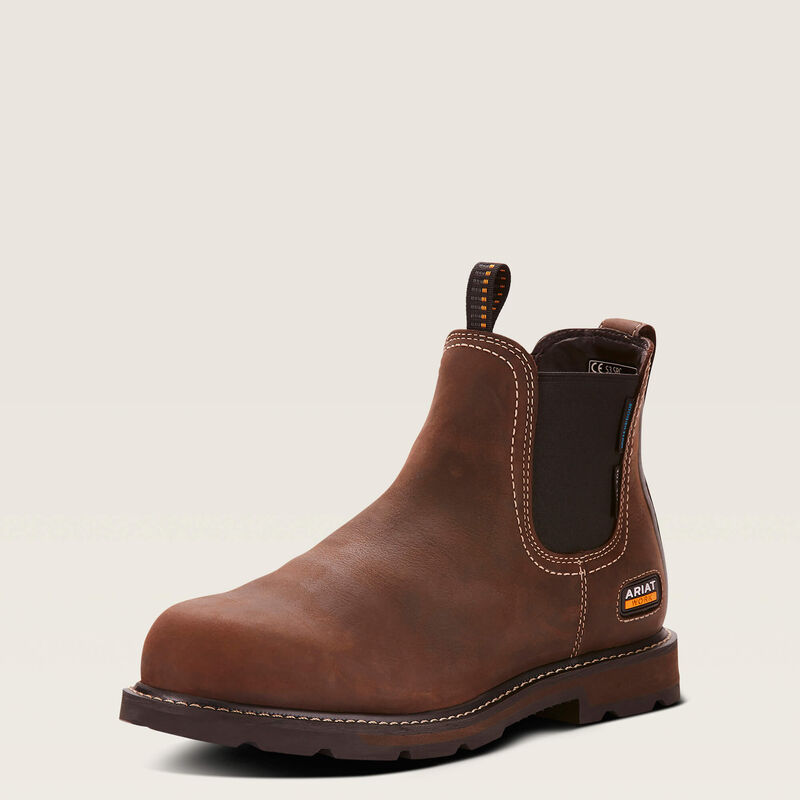
£140.00
Groundbreaker pairs just-right cushioning with versatile traction for an all-around boot that's best for construction, factory, warehouse, or farm and yard work.
Composite Toe: Lightweight Comfort in Every Step
“I work in agriculture in all weathers and temperatures. What will keep me warm and protected?”

If you’re working in freezing temperatures or on cold surfaces, composite toe work boots are a smart choice. Unlike steel, composite materials do not conduct heat, which helps keep your feet warmer.
Since they aren’t made of metal, composite and carbon toe boots are roughly 11% lighter than steel toe options, which can reduce fatigue during long hours on your feet. These boots also do not conduct electricity, so if your job involves working closely with electrics, these boots are the preferred choice.
Our women's Riveter Collection offers composite toe boots in a variety of styles, all of which comply with EU regulations and UK legislation for safety footwear.
Our men’s WorkHog XT work boots boast the same western inspired styling but without the steel toe, providing a lightweight option with the same level of protection.
Temperature tip: Composite toes stay more comfortable in both extreme cold and heat, making them a reliable all-season option.
Best for: Cold-weather workers, and those looking for lightweight, protective boots that won’t weigh them down.

£130.00
The Riveter delivers amazing all-day comfort, stability, and traction for long hours on outdoor jobs.

£180.00
The WorkHog® XT delivers maximum side-to-side stability with best-in-class cushioning and shock absorption.
Choosing the Right Toe for Your Environment
Still not sure which safety toe is best for your job? Here’s a quick side-by-side to guide your decision:
Safety Toe Type | Weight | Temperature Resistance | Metal Free | Best For |
Steel Toe | Heaviest | Moderate | No | Moderate climates, work environments where slim profile safety toe design is preferred. |
Composite and Carbon Toe | Medium | High | Yes | Cold weather conditions, lightweight conditions |
Try Them Out for Yourself
The right safety toe depends on how you move, what you lift, and where you work. Try on a steel toe if your worksite is full of hazards, or lace up a composite toe if you're outdoors or in the cold. You'll feel the difference and know you're protected.
FAQs: Work Boot Safety Toes
What’s the difference between a soft toe and a safety toe?
Soft toe boots do not include a reinforced protective cap in the toe box. They’re typically lighter and more flexible, making them ideal for jobs where there is no risk of impact or compression hazards.
Safety toe boots include a reinforced toe cap made from steel or composite. They are designed to protect your feet from impact and compression.
Can I wear safety toe boots in winter?
Yes. All safety toe boots can be worn in winter, but the material choice matters.
Composite toes resist temperature transfer, which can make them more comfortable in the colder conditions. Steel toes can reflect the ambient temperature, so insulated styles are recommended for colder climates and regions where freezing temperatures are common.
When do I need safety toe boots?
If your job involves the use of heavy machinery or lifting heavy objects, it is recommended that you wear safety toe boots. Safety toe boots are often required by safety guidelines or your employer.
Can safety toe boots be stylish?
Ariat designs safety toe work boots in a range of silhouettes, including classic cowboy boot styles, versatile Chelsea boots, and traditional lace-up work boots. That means you can choose a look that fits your style while still getting certified protection.
Steel toe options in particular can offer a slimmer profile and a classic Western look, but every safety toe boot for men or women is built with performance and style in mind.
Do safety toe boots make your feet tired?
Safety toe boots can feel heavier depending on the material, but overall comfort depends on how the boot is designed.
Steel toes are slightly heavier, while composite work boot options reduce weight, which may help minimise fatigue during long hours on your feet. However, the biggest factors in all-day comfort are cushioning, arch support, stability, and shock absorption.
Ariat was founded on integrating athletic footwear technology into work and riding boots. Every safety toe style is engineered for maximum support, comfort, and durability, so you get certified protection without sacrificing performance on the job.