

How Should Work Boots Fit? All About Wearing Work Boots
This guide will cover everything you need to know about wearing work boots, including choosing the right style for your trade, measuring your feet, and making sure you get the perfect fit.
The right work boots are essential for comfort, safety, and long-term foot health. A good fit can prevent fatigue, reduce the risk of injury, and improve your overall job performance whether you’re working on a farm, as a trade or within the agriculture industry.
Before we dive into the details, here’s a quick guide on sizing work boots:
How to Fit Work Boots in Four Easy Steps
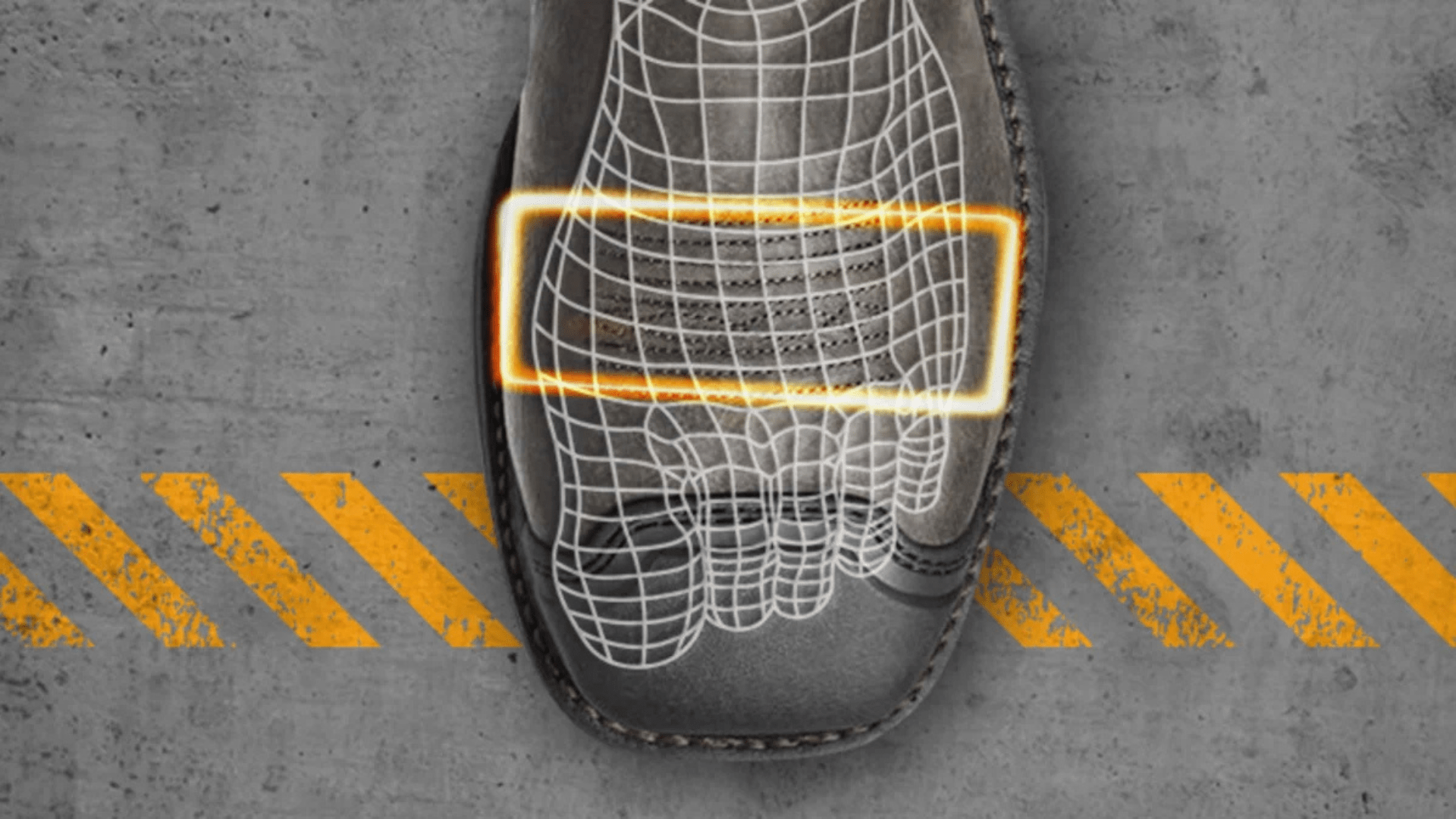
1. Check the Snugness
Put on your work boot and ensure it fits snugly across the top of your foot. It should feel firm but not uncomfortably tight. Keep in mind that most parts of the boot, including the top of the foot, will stretch over time for a more personalised fit. However, the toe box is designed to maintain its shape, as it is typically reinforced with extra materials for durability and protection. Work boot outsoles are designed to be tough and durable which can make them stiff until you break them in.
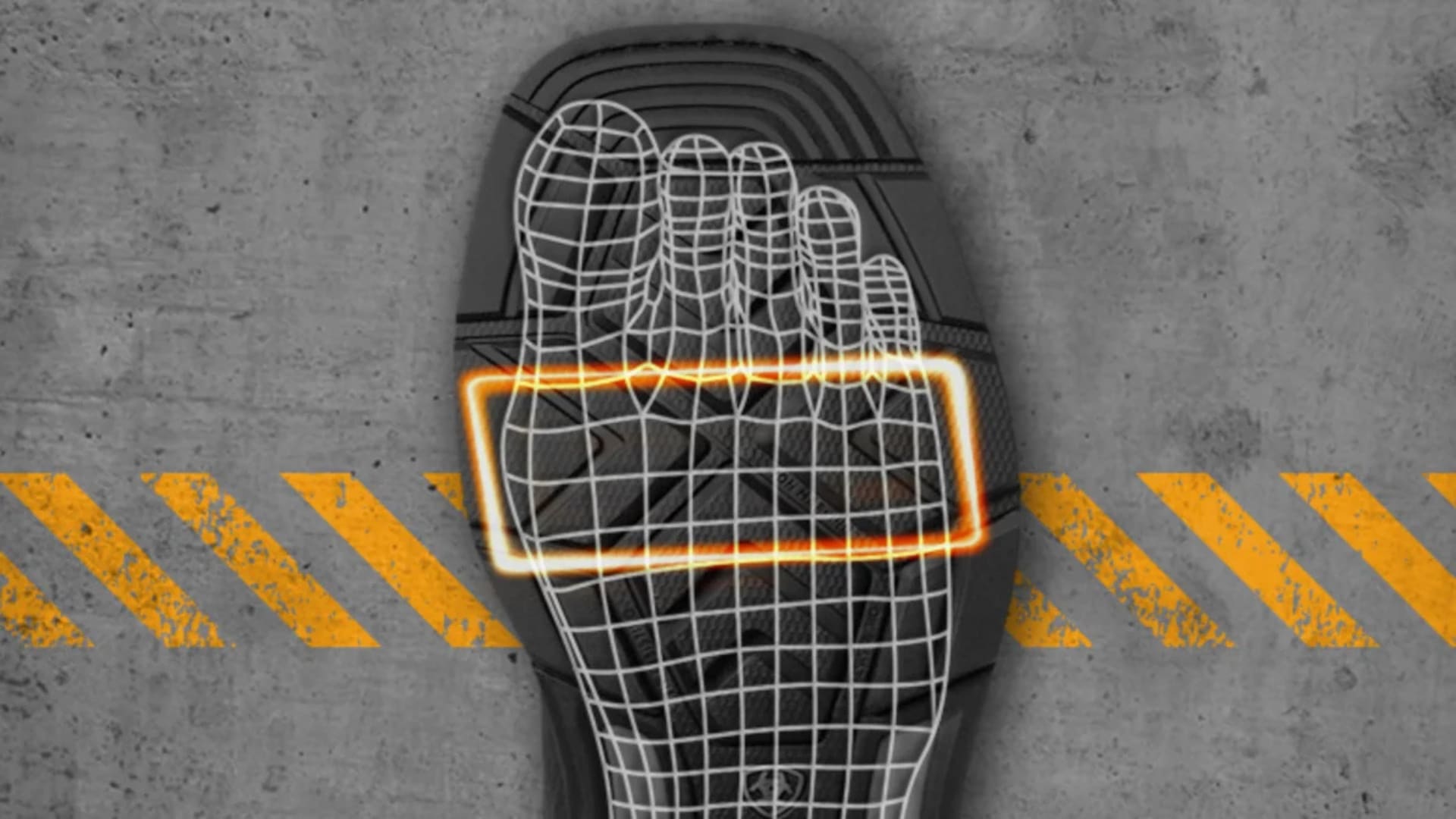
2. Align the Ball of Your Foot with the Boot’s Widest Point
The ball of your foot should sit at the widest part of the boot. This ensures the boot bends where your foot naturally flexes, preventing discomfort and improving overall support. We offer EE Width in some men’s styles for a more comfortable fit for wider feet.
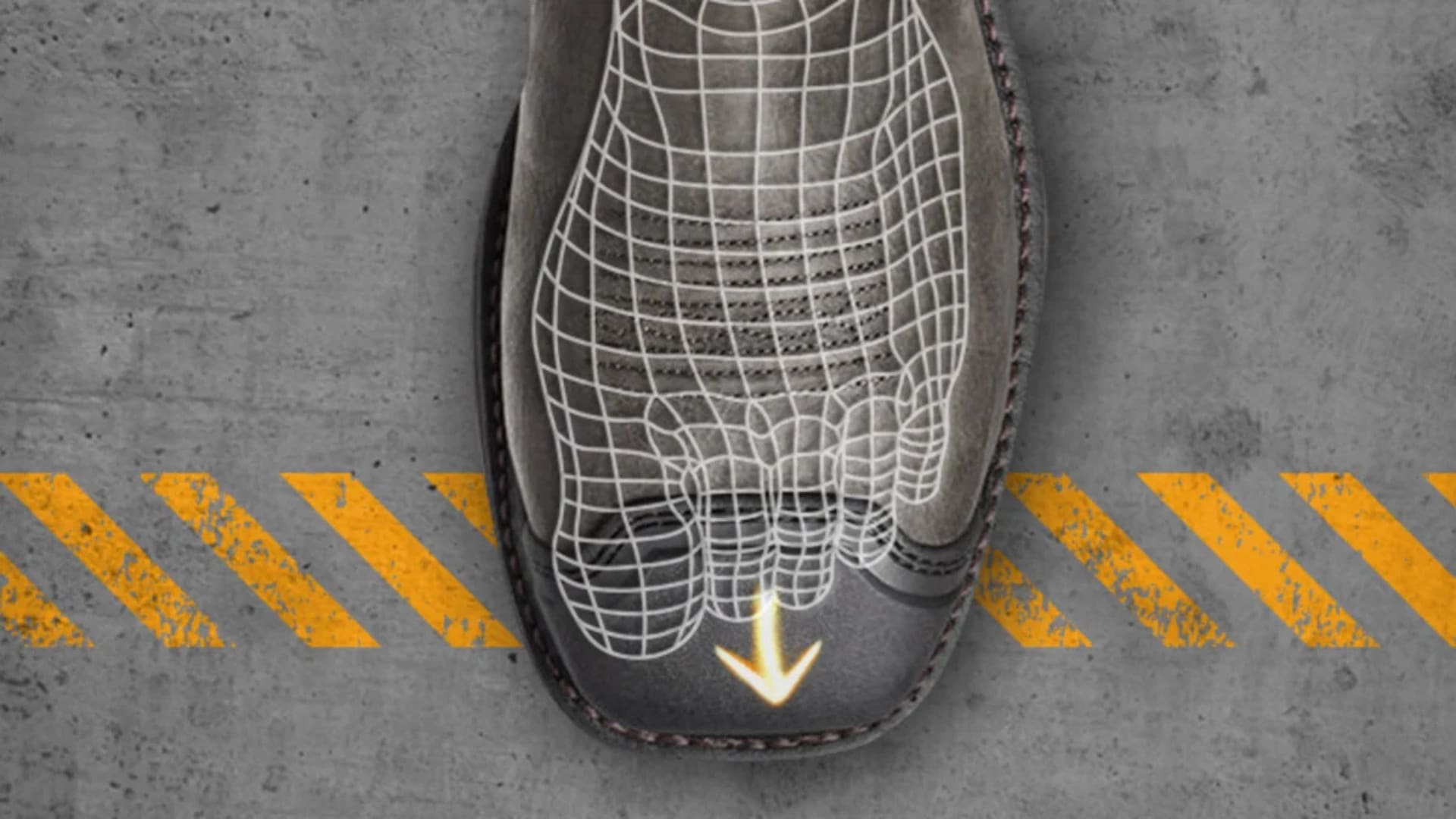
3. Check for Toe Room and Walk Around
Make sure your toes aren’t cramped by wiggling them inside the boot. Remember that the toe box won’t stretch over time, so it’s important to have enough room for the widest part of your foot from the start. Walk around to ensure a comfortable, secure fit before heading off to work.
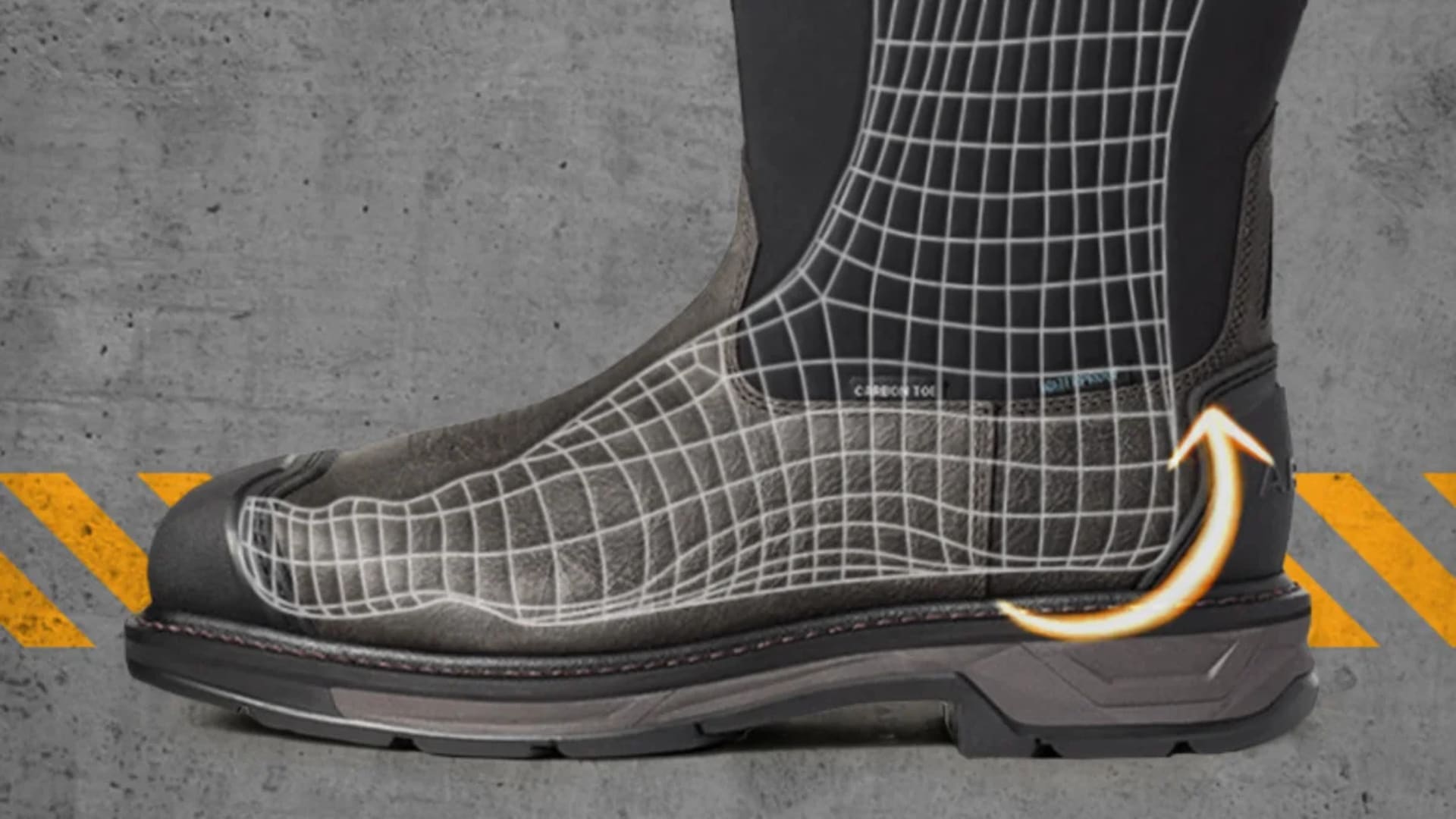
4. Expect Some Heel Slippage at First
When you walk, you may notice slight heel movement. This is normal until the forefoot of the boot breaks in. Over time, the slipping will decrease, and the boot will move more naturally with your foot.
Finding and Fitting Different Types of Work Boots
Work boots are designed for different tasks, so choosing the right pair depends on your work environment and the needs of your job.
Here’s what to consider when you’re shopping for work boots:
- Toe Types – Depending on the job, you may need steel or composite toe boots. Safety toe options often provide more toe room than soft-toe boots.
- Sole Type – Slip-resistant soles are essential on wet or oily surfaces, and shock-absorbing soles are ideal for long hours on concrete.
- Material – Work boots are usually made from either leather or synthetic material. Both are durable, but leather will stretch more than synthetic materials.
- Waterproofing – If you work outdoors, look for waterproofing for wet weather.
- Metallic vs. Non-metallic – It is worthwhile considering if you will need a metallic toe, such as a steel toe work boot, or if a soft toe is appropriate. Our composite toe work boots also provide the same level of protection but in a lightweight style.
- Lace-up vs. Pull-on – There is no big difference in fit between lace-up and pull-on work boots, but laces allow for some adjustability across the width and instep. While lace-up boots provide a secure fit and may be required on certain job sites, pull-on work boots are easier to slip on and off.
Most Durable Steel-Toe Boot for Maximum Protection & Comfort:
How should steel-toe boots fit?
A steel-toe boot should fit the same as any other work boot. The most important fit tip for every safety toe boot is that you do not want to feel any tightness or pinching in the toe box.

£170.00
Loaded with comfort and durability technology, the WorkHog delivers exceptional stability with cushioning and shock absorption.
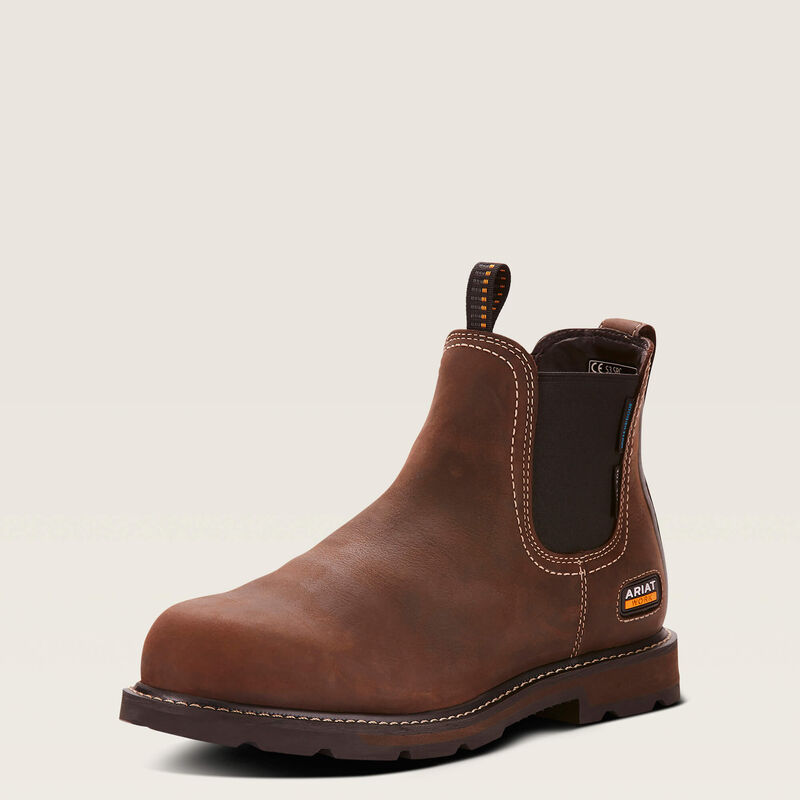
£140.00
Our Groundbreaker work boot pairs just-right cushioning with versatile traction for a great all-around boot for long days on your feet.
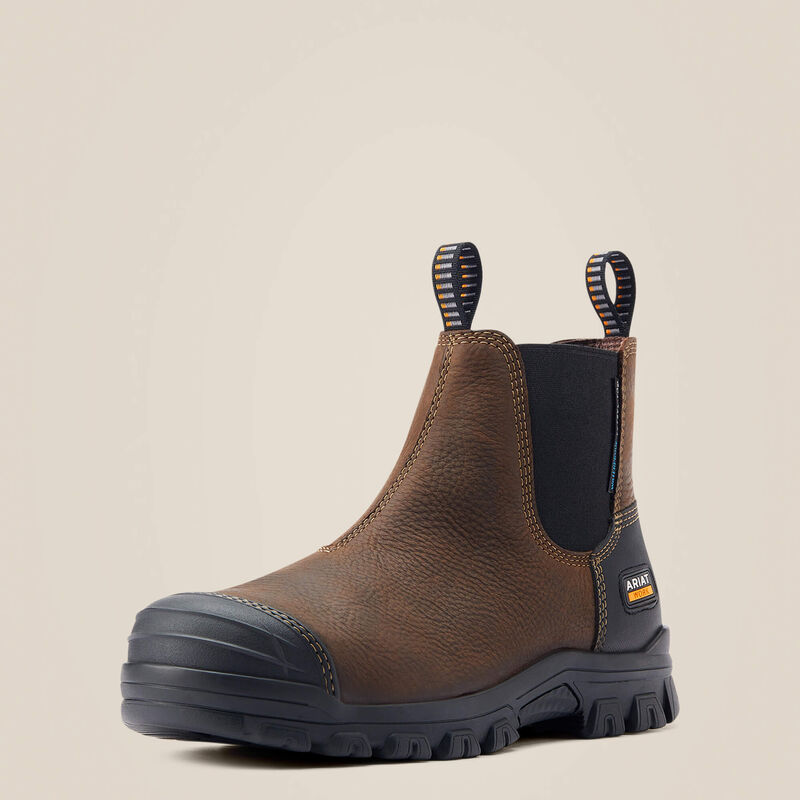
£115.00
Designed for comfort and protection for long hours on your feet, the Treadfast features waterproof construction, multi-surface traction, and a reinforced safety toe.
Composite and Carbon Toe Work Boots : A Lightweight Protective Option
How should composite toe work boots fit?
Our composite and carbon composite work toe boots fit similarly to steel toe boots, providing the same level of protection but designed with a composite toe for a lightweight finish.

£130.00
The Riveter delivers amazing all-day comfort, stability, and traction for long hours on outdoor jobs.

£180.00
The WorkHog® XT delivers maximum side-to-side stability with best-in-class cushioning and shock absorption.
Best Soft-Toe Work Boots: Lightweight, Durable & Protective:
How should soft toe work boots fit?
Soft toe work boots should fit comfortably, snug and supportive, without too much room for foot movement. Your heel may slip slightly during initial wear as the boot moulds to your foot. It is also important to consider that the toe box in soft toe boots may not stay as shapely as steel toe boots as they are not as reinforced.

£130.00
The Groundbreaker collection pairs just-right cushioning with versatile traction for an all-around boot that's best for construction, factory, warehouse, or farm and yard work.

FAQ: Common Work Boot Fit Questions
What size would women wear in a men’s work boot?
Women should size down 1.5 sizes in men’s work boots. For example, a woman's size 9 is typically a men’s size 7.5. Our range of Riveter women's boots are also a great choice for women’s work boots.
How are work boots supposed to fit?
They should fit snugly across the top of your foot with some initial heel slip. Over time, the boot will mould to your foot for a customized fit.
Should you go up or down a size in work boots?
Stick to your standard size. However, if you’re wearing steel-toe boots, you may need to go half a size up for extra comfort. Consider trying multiple sizes to ensure you get the right fit and comfort for you.
Are work boots supposed to be tight at first?
They should feel snug but not restrictive. The toe box should never feel tight, as it won’t stretch over time.
How much wiggle room should work boots have?
You should have a little toe movement, but the boot shouldn’t feel loose.